
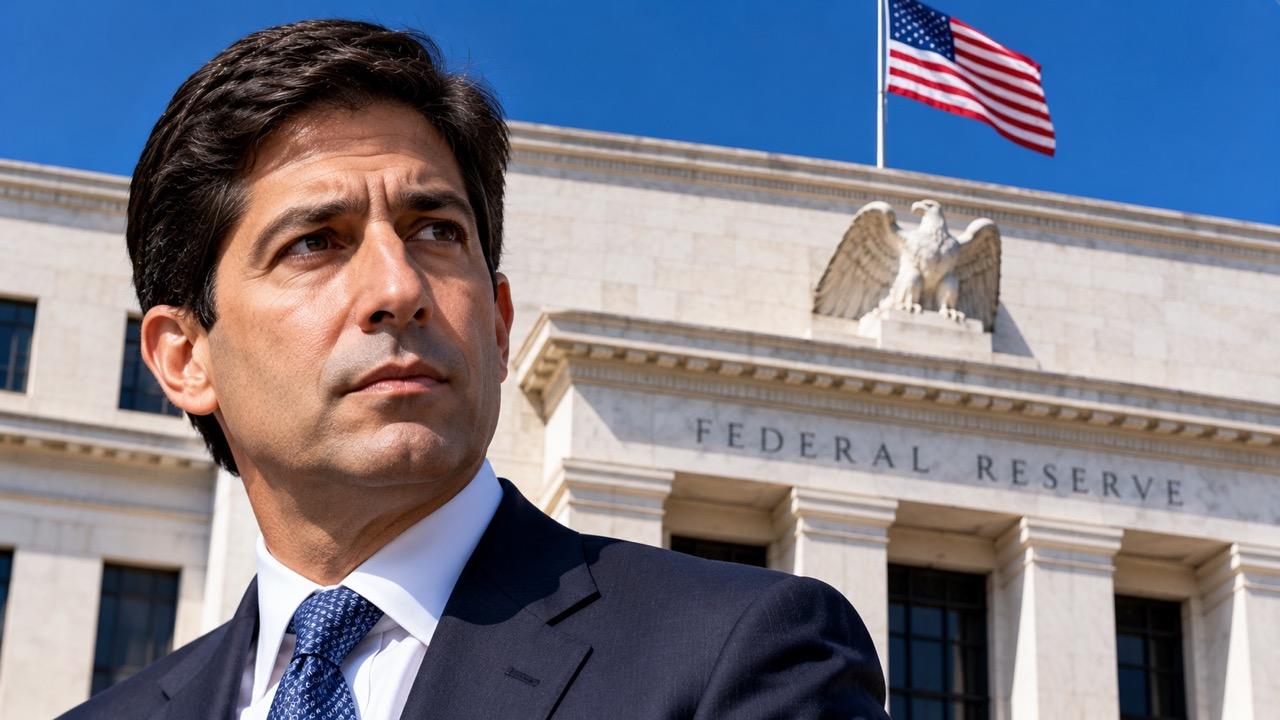
- Federal Reserve Chair Kevin Warsh has moved quickly to change how the central bank communicates and evaluates financial conditions, but his plans to shrink the Fed's $6.7 trillion balance sheet are moving more slowly.
Federal Reserve Chair Kevin Warsh has spent his first 127 days reshaping the central bank's approach to monetary policy, moving away from traditional forward guidance while putting greater emphasis on broad financial conditions, according to CNBC.
The shift comes after the Federal Open Market Committee unanimously raised its benchmark interest rate by 25 basis points on Sept. 16 to a range of 3.75%-4%, the first increase since 2023. The Fed said inflation remains elevated while economic activity continues to expand at a solid pace.
Warsh has been more willing than his predecessors to leave the future path of interest rates open. Rather than relying heavily on forward guidance, he has emphasized incoming economic and market conditions when explaining monetary policy.
That approach is becoming particularly important as inflation remains above the Fed's 2% target and financial markets continue to price the possibility of additional rate increases.
Why Kevin Warsh Is Focusing on Financial Conditions
Warsh has repeatedly highlighted a broader collection of financial indicators when discussing whether monetary policy is restrictive enough. Those measures include asset prices, Treasury yields and trading volumes, the dollar, credit costs and availability, and commodity prices. Warsh said these indicators should help the Fed assess economic activity, inflation and risks across the financial cycle.
The approach differs from the traditional focus on whether the federal funds rate is above or below an estimated neutral rate.
At his Sept. 16 news conference, Warsh said the concept of a neutral rate was useful academically but did not determine whether the Fed should raise rates.
Markets are already reflecting expectations for further tightening. The CNBC report noted that the 2-year Treasury yield was nearly a full percentage point above the effective federal funds rate, the largest such spread since 2023. The report also cited a roughly 70% market-implied probability of another rate increase in October.
Inflation remains a central consideration. The latest figure cited in the CNBC report showed headline personal consumption expenditures inflation at 3.7% in July, well above the Fed's 2% objective.
Warsh has also pointed to credit conditions and commodity prices. In his Jackson Hole speech, he said credit and loan markets showed few signs of monetary restraint, while rising commodity prices could become more important if inflation remains elevated.
Why the Fed's Balance Sheet Is a Bigger Challenge
The more difficult part of Warsh's agenda is the Federal Reserve's balance sheet.
The Fed's assets currently total about $6.7 trillion, and reducing that balance sheet has been a long-standing priority for Warsh. The process could involve allowing securities to mature without reinvestment or selling assets outright.
Warsh has not yet committed to a specific timetable for significant balance-sheet reductions.
Part of the reason is that other FOMC officials have been reluctant to move quickly. Minutes from the July meeting showed policymakers wanted to wait for the task forces established by Warsh to complete their reviews before making major changes.
Those task forces are examining different aspects of Federal Reserve operations and are expected to report early next year.
The economic backdrop also complicates the timing. Inflation remains above target, oil prices have risen sharply, and the 10-year Treasury yield has moved above 5%, increasing borrowing costs for households and businesses.
The Fed is also maintaining an ample-reserves framework. Its Sept. 16 implementation note instructed the New York Fed to conduct operations as necessary to keep the federal funds rate within the 3.75%-4% target range and to maintain an ample level of reserves.