
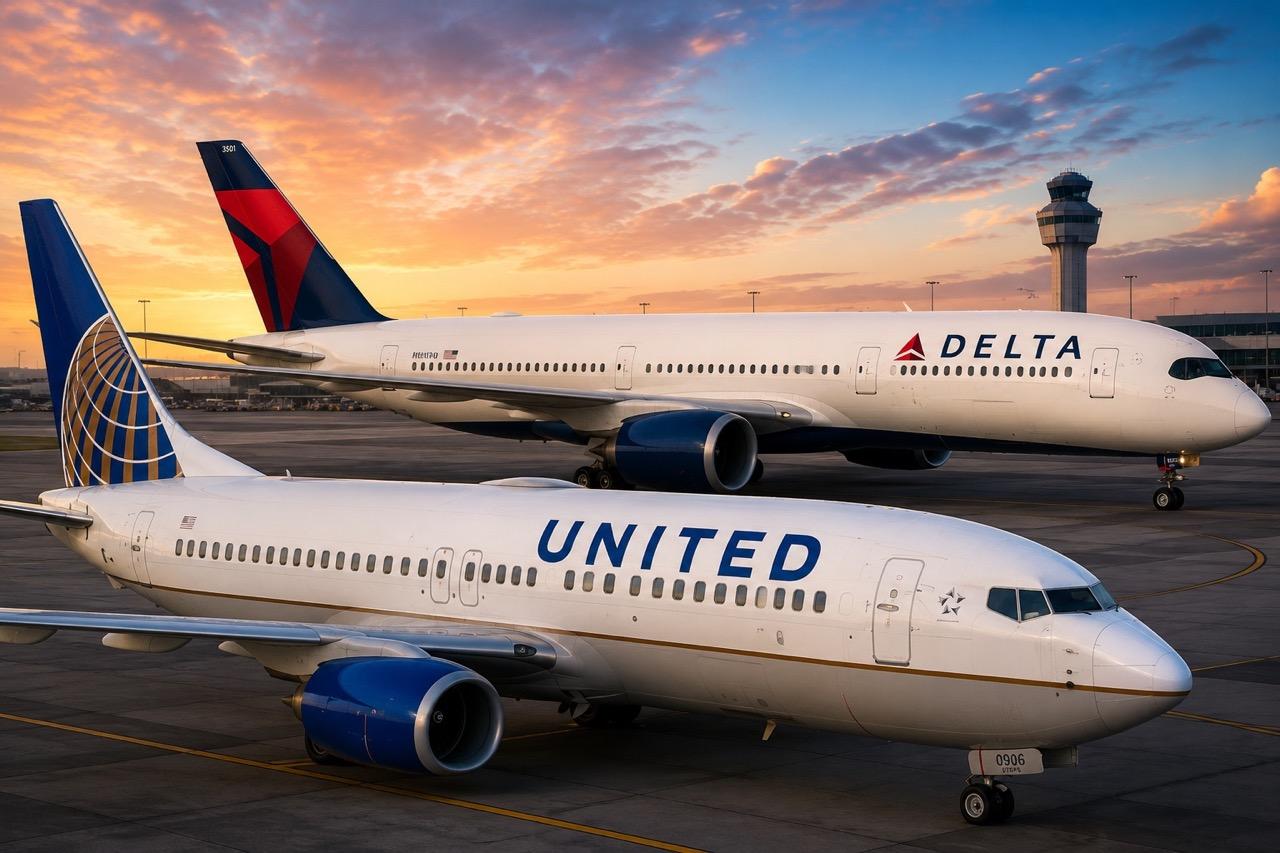
United Airlines and Delta Air Lines explored a potential merger behind closed doors last year, according to the Wall Street Journal, a move that could have created the most powerful airline in US aviation history before the discussions quietly ended. The previously undisclosed talks offer a rare glimpse into how even the industry's biggest players have been weighing consolidation as airlines navigate rising costs, capacity shifts and slowing travel demand.
According to people familiar with the discussions, United CEO Scott Kirby personally contacted Delta CEO Ed Bastian to gauge interest in combining the two carriers. Delta reportedly reviewed the proposal and conducted preliminary due diligence before deciding not to pursue the transaction. Both companies ultimately moved on without entering formal merger negotiations.
The revelation comes just months after Kirby acknowledged approaching American Airlines about a separate merger idea, highlighting United's willingness to explore transformative deals even as executives publicly downplayed the likelihood of large-scale consolidation.
Why The United And Delta Air Merger Would Have Changed The Airline Industry
A combination of United and Delta would have reshaped the U.S. airline market overnight. Delta currently carries a market capitalization of roughly $56 billion, while United is valued at approximately $38 billion, giving the combined company an equity value approaching $94 billion before any merger premium. Together, the airlines generated more than 90% of the industry's profits last year, making them the two most profitable major U.S. carriers.
The merger would also have united two enormous global networks. United operates major hubs in Chicago O'Hare, Newark, Denver, Houston, San Francisco, Washington Dulles, Los Angeles and Guam. Delta's largest hubs include Atlanta, Minneapolis-St. Paul, Detroit, Salt Lake City, Seattle, Boston, New York JFK and Los Angeles. Together, the combined airline would have controlled thousands of daily departures, hundreds of international routes and one of the world's largest commercial aircraft fleets.
For travellers, that scale could have delivered a broader route network and improved international connectivity. However, industry analysts have long argued that such benefits would likely be outweighed by reduced competition on many domestic routes.
The airline industry has already undergone significant consolidation over the past two decades through mergers involving Delta-Northwest, United-Continental, Southwest-AirTran, American-US Airways and Alaska-Hawaiian. Each transaction reduced the number of major competitors while creating larger national carriers.
Why Delta Walked Away And What It Means For Investors
Although United initiated the discussions, Delta ultimately chose not to move forward after reviewing the proposal. Neither airline has publicly explained the reasons, but the biggest obstacle was likely regulatory approval.
A United-Delta combination would almost certainly have faced intense scrutiny from the U.S. Department of Justice and state attorneys general because of its potential impact on competition, airfare pricing, airport slot concentration and consumer choice. Even under a regulatory environment perceived as more receptive to mergers, legal experts viewed such a deal as extraordinarily difficult to approve.
The failed discussions also illustrate how airline executives are preparing for a more challenging operating environment. Rising fuel costs, aircraft delivery delays, higher labour expenses and uneven travel demand have all pressured margins across the industry during the past year.
Scott Kirby has since indicated that United is unlikely to pursue another large airline merger, instead focusing on acquiring airport gates, landing slots or other strategic assets if opportunities arise.
For investors, the episode provides several important takeaways:
- United continues to pursue aggressive long-term growth opportunities.
- Delta remains focused on its premium-service strategy rather than transformational mergers.
- Regulatory risk remains one of the biggest barriers to consolidation among America's largest airlines.
- Future airline acquisitions are more likely to involve smaller asset purchases than blockbuster mergers.
While the proposed combination never progressed beyond preliminary discussions, it underscores how dramatically the airline industry could change if regulators ever became more receptive to mergers between the country's largest carriers.
For now, United and Delta remain fierce competitors, battling for premium travellers, international market share and corporate customers rather than combining forces. With both companies investing heavily in new aircraft, premium cabins, loyalty programmes and international expansion, investors are likely to focus less on merger speculation and more on earnings growth, passenger demand and profit margins over the coming quarters.