
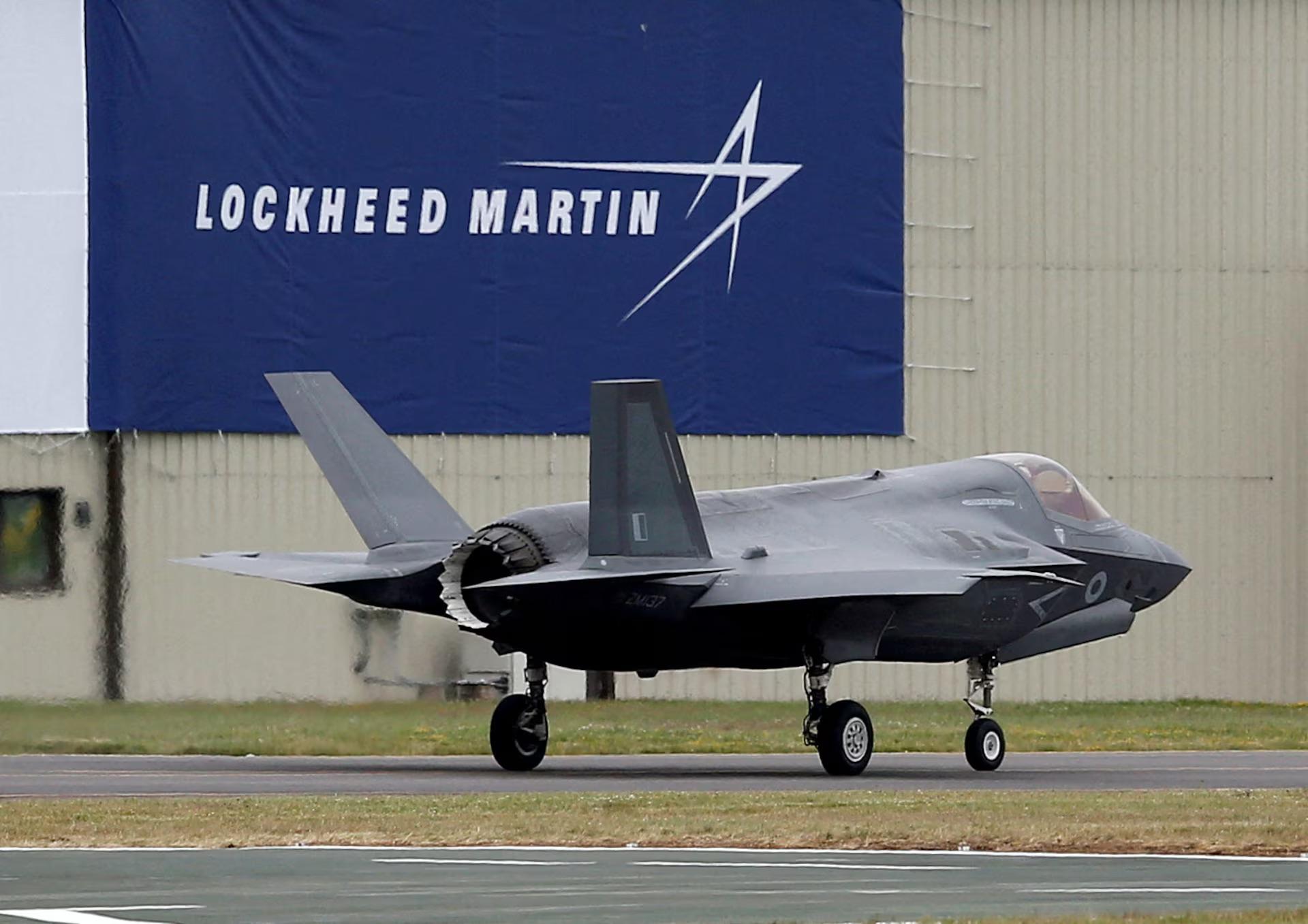
War is big business, and Lockheed Martin and Ultra Maritime are at the center of a $3.45 billion defense deal that could reshape part of the undersea warfare market. Lockheed Martin announced this deal on July 6, 2026, revealing that it has signed a definitive agreement to acquire the naval systems specialist from Advent International. In Lockheed Martin’s own framing, the deal is about extending its role in a segment where detection and countermeasure systems can matter as much as platforms themselves.
The agreement follows reports earlier this month that Lockheed Martin had emerged as the leading bidder during a competitive sale process managed by private equity firm Advent, which acquired Cobham before combining it with Ultra Electronics to create today's Ultra Maritime business.
What The $3.45 Billion Deal Between Lockheed Martin And Ultra Maritime Means
According to Lockheed Martin’s press release, the purchase price is now locked at $3.45 billion, and this purchase will see Ultra Maritime move into Lockheed Martin’s Rotary and Mission Systems unit after closing. The transaction is one of the clearest signs yet that major defense contractors are still willing to pay up for niche, mission-critical technology, especially in anti-submarine warfare, sonar, and maritime sensing.
Ultra Maritime specializes in advanced undersea warfare and anti-submarine warfare capabilities for allied naval forces. Its products include sonar technologies, sonobuoys, torpedo defense systems, radar solutions, and autonomous maritime sensing platforms.
This elaborate product mix matters because undersea warfare is a high-barrier market. Customers are typically governments, procurement cycles are long, and technology must be rugged enough to operate in harsh environments while meeting military reliability standards. Thus, a business like Ultra Maritime is attractive to investors because it sells capabilities that are hard to replace and difficult to build quickly from scratch.
Lockheed Martin said the acquisition will strengthen its ability to support allied naval forces in the undersea domain and expand sonar solutions across next-generation maritime platforms. Reuters previously cited the valuation at about $3.5 billion during the bidding process, and the final announced figure is essentially unchanged at $3.45 billion. In a sector where acquisitions can be justified by backlog, installed base, and long contract tails, that premium suggests Lockheed Martin sees durable demand rather than a one-off opportunity.
Ultra Maritime commands such a high valuation because it is a meaningful strategic fit for a defense contractor trying to deepen exposure to recurring modernization spend. It also gives Lockheed Martin a larger stake in the tools navies use to detect submarines, protect ships from torpedoes, and monitor contested waterways.
Advent International, which acquired Cobham in 2019 and later combined it with Ultra Electronics, said in the release that Ultra Maritime had been underinvested before its ownership and is now a stronger, more innovative business with greater industrial capacity and next-generation autonomous solutions due to the acquisition.
What To Watch Next As Lockheed Martin Absorbs Ultra Maritime
Lockheed Martin did not disclose a closing date for the Ultra Maritime, and the deal remains subject to customary regulatory approvals and closing conditions. This means that the deal is still subject to regulatory review, which means the deal must clear the usual approvals before closing.
However, once the transaction closes, the acquired business will be integrated into Lockheed Martin's Rotary and Mission Systems division, which generated approximately $17.3 billion in revenue during 2025 and employs roughly 35,000 people worldwide. Stephanie Hill, president of Rotary and Mission Systems, described the acquisition as an important step toward accelerating next-generation undersea warfare capabilities for both U.S. and allied customers.
For Lockheed Martin, this acquisition is an incredibly strategic decision. It comes after the United States government proposed a defense budget approaching $1.5 trillion for fiscal 2027, creating additional demand for advanced military technologies ranging from missile defense systems to autonomous maritime platforms. This environment has encouraged major contractors like Lockheed Martin to pursue strategic acquisitions that strengthen long-term growth prospects.
Financially, the acquisition represents another sizeable investment by Lockheed Martin, whose market capitalization exceeds $125 billion. The $3.45 billion purchase price accounts for roughly 2.7% of the company's market value.