
The first major stock moves tied to Warren Buffett’s Berkshire Hathaway this year have centered on a small cluster of names. These include Delta Air Lines, Macy’s, and Alphabet, plus a major June follow-on deal that deepened the Google parent bet. The filings and deal disclosures show a mix of classic Berkshire-style value hunting and a newer willingness to lean into secular growth at a reasonable price.
Berkshire’s Q1 2026 13F filing reported two brand-new U.S.-listed positions, Delta Air Lines and Macy’s, while also showing a large increase in Alphabet. Then, on June 6, Berkshire confirmed a separate $10 billion private placement in Alphabet, paying $351.81 for Class A shares and $348.20 for Class C shares, according to CNBC.
Warren Buffett’s Latest Stock Buys And What They Cost
Below is the publicly disclosed stock portfolio using Berkshire’s reported cost basis and the most recent public updates available as of July 3, 2026:
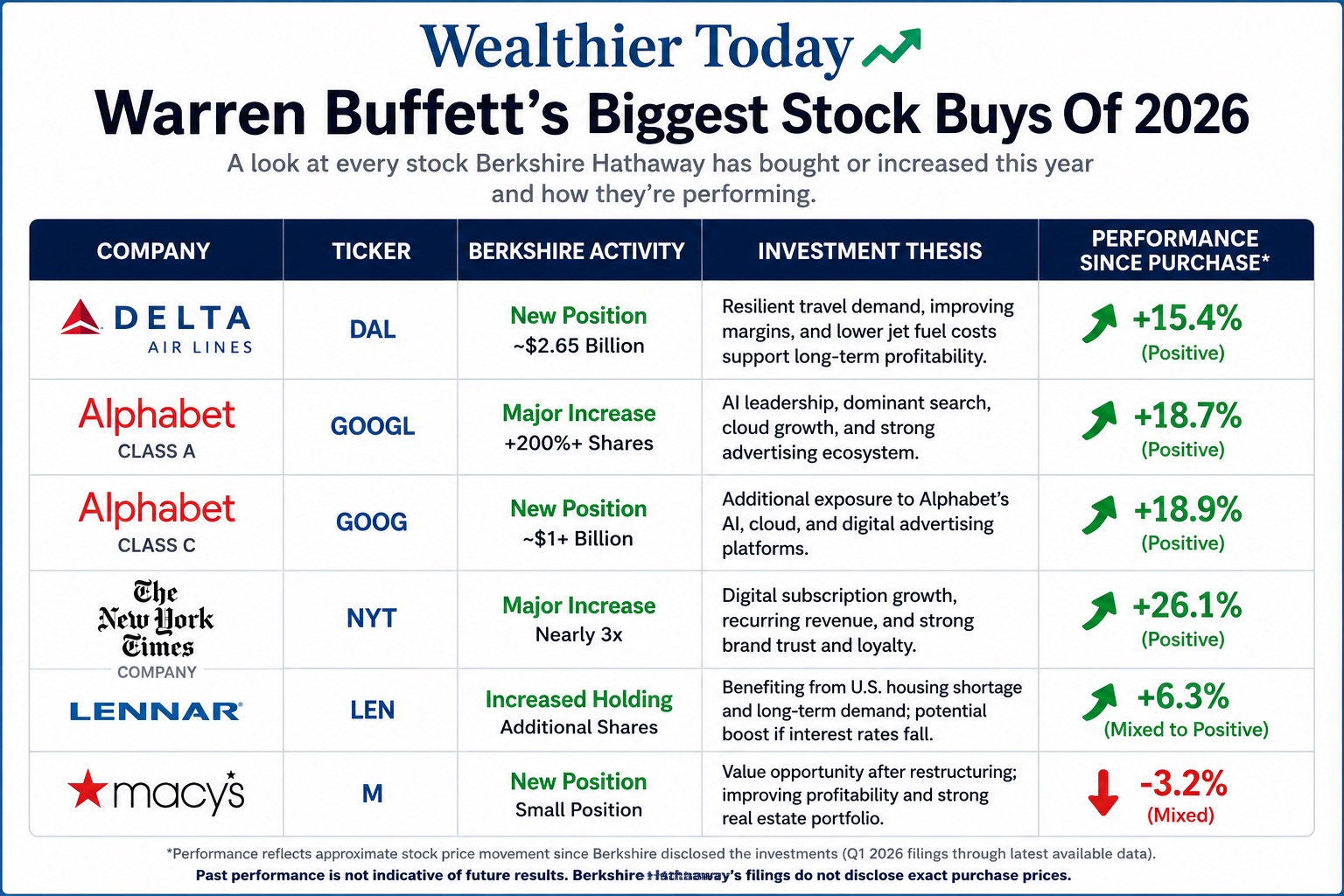
Berkshire bought 39.8 million Delta shares worth $2.65 billion and roughly 3.0 million Macy’s shares in the first quarter, while also more than tripling its Alphabet stake. In total, Berkshire’s first-quarter changes were tied to a broader portfolio reshuffle under Greg Abel’s growing capital-allocation role, even as Buffett remains chairman and still shapes the firm’s investment culture.
Delta is the cleanest example of a stock that looks more “Buffett-like” than it first appears. The firm has long preferred businesses with pricing power and shareholder-friendly capital allocation, and Delta has spent years trying to transform airlines from chronic value traps into steadier cash generators. The market response to the buy was immediate, as the airline’s shares jumped after the filing, and the position has stayed modestly ahead of Berkshire’s reported entry level.
Macy’s is a more controversial bet, but the thesis is easy to understand. Berkshire has often liked companies where the market may be discounting hidden assets, and Macy’s owns meaningful real estate. CNBC noted that Buffett himself once described a “tiny purchase” he was looking at, which fueled speculation that the retailer may have been his handiwork, though that remains unconfirmed. On the numbers, Macy’s has been the weakest of the three disclosed first-quarter additions, either trading near or below Berkshire’s entry price over the time the firm has held it.
Berkshire expanded its investment in Lennar Corporation, one of America's largest homebuilders. Despite elevated mortgage rates, Lennar continues to benefit from limited housing inventory and strong long-term demand for new homes. If interest rates begin falling later this year, then homebuilders may experience another wave of demand.
The New York Times Company was perhaps the year's biggest surprise to appear in Berkshire’s portfolio. The firm first established the position earlier in the year before nearly tripling it during the latest quarter after the publisher successfully transformed itself into a digital subscription business.
In total, the Alphabet investment is the biggest swing. Berkshire’s Q1 position already looked notable because Buffett historically avoided big technology exposure, yet Alphabet combines scale, a dominant search business, and heavy free cash flow. The June private placement added a second layer, with Berkshire agreeing to buy $10 billion of stock directly from Alphabet as part of the company’s financing tied to AI spending. That move suggests Berkshire sees the business as more than just a tech trade. At this point, it looks like a long-duration platform with durable economics and a large runway.
What Warren Buffett’s Latest Stock Bets Say About Berkshire
The broader message is that Warren Buffett’s Berkshire is still hunting for asymmetric value, but it is doing so with a wider lens than it suggests. The new stock buys mix cyclical recovery, special-situation value, and high-quality growth. This shows that the firm is not just sitting on cash and Treasury bills, since it is still deploying capital when the setup matches Berkshire’s standards.
There is also a management transition story here. Berkshire’s March 31 holdings snapshot arrived after Greg Abel assumed the CEO role, and the new purchases show how the portfolio can still evolve even if Buffett’s personal style remains the reference point.