
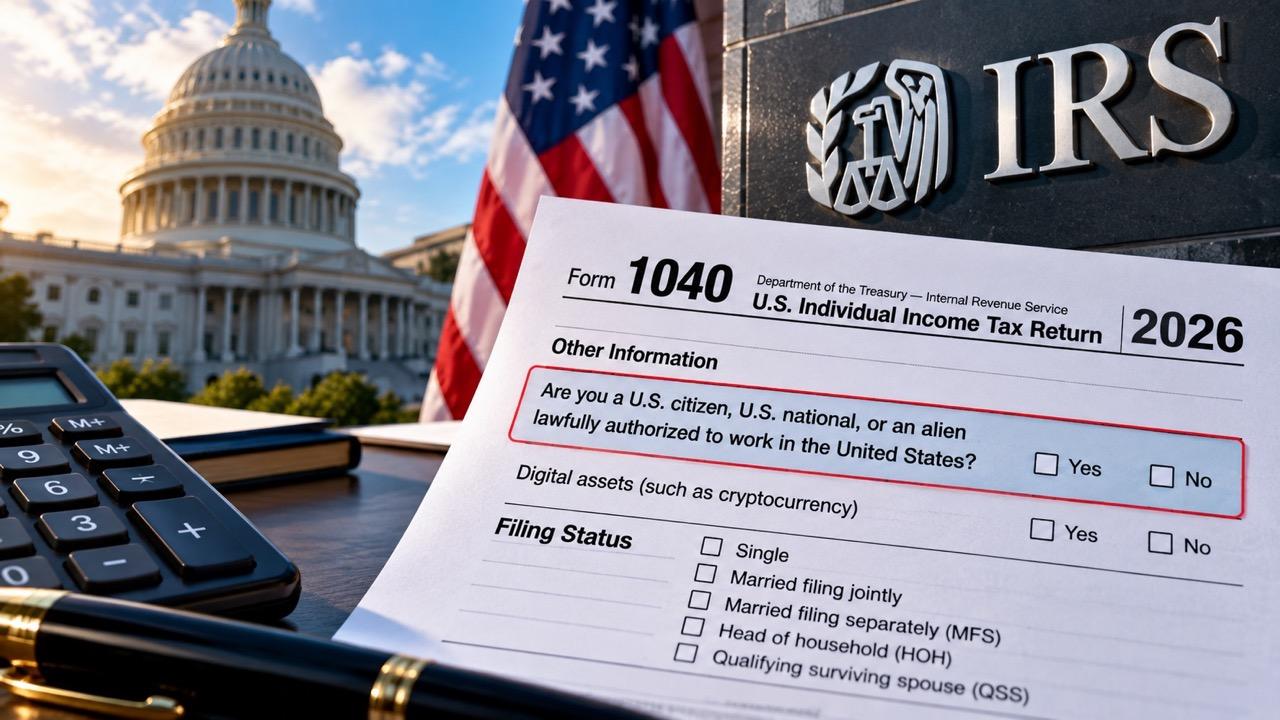
- A new Trump Administration tax change could require taxpayers to answer a citizenship and work-authorization question on the 2026 Form 1040, while separate proposed rules would restrict certain refundable tax credits to eligible taxpayers.
The Trump Administration is moving ahead with changes to federal tax administration that could affect how millions of Americans complete their 2026 tax returns. The IRS has added a new question to its draft 2026 Form 1040 asking whether the taxpayer, and a spouse filing jointly, is a US citizen, US national or an alien lawfully authorized to work in the US. The IRS draft tax forms show the updated Form 1040 was posted Sept. 17.
The change was highlighted by the New York Times in its report, which reported that the Trump Administration is moving toward collecting the information through the federal income-tax filing process. The form remains a draft and could still change before the IRS releases the final version. The question would apply to tax year 2026 returns filed during the 2027 tax season, rather than returns filed for tax year 2025 during the 2026 filing season.
The new question also does not replace existing federal tax rules governing who must file a return. Noncitizens can have federal income-tax filing obligations depending on their residency, income and other circumstances.
Trump Administration Links Tax Filing to Refundable Credit Rules
The Form 1040 change comes alongside separate tax-credit rules being developed by the Trump Administration and the Treasury Department. In August, the Treasury Department and IRS proposed regulations addressing eligibility for the refunded portion of certain refundable federal income-tax credits.
The IRS says the proposed rules would treat the refunded portions of the Earned Income Tax Credit, Child Tax Credit, American Opportunity Tax Credit and Adoption Tax Credit as federal public benefits for purposes of the Personal Responsibility and Work Opportunity Reconciliation Act of 1996. Under the proposal, taxpayers would generally need to be US citizens, US nationals or qualified aliens to receive the refundable portion of those credits.
The IRS has also posted a new Schedule 3-A, Federal Public Benefit, among its 2026 draft forms. The agency's Internal Revenue Bulletin explains that taxpayers claiming affected refundable credits could be required to certify their eligibility.
The proposed rules are connected to broader tax provisions implemented under the Working Families Tax Cuts, the legislation signed by Trump in 2025. The IRS has already issued extensive guidance on changes from the law, including new deductions, credits and withholding rules for 2026.
That legislation also created Trump Accounts, a new tax-advantaged savings vehicle for eligible children. The IRS began allowing taxpayers to make Trump Account elections through their online accounts in May.
The citizenship question and refundable-credit proposal address different parts of the tax system. The first concerns information collected on the draft Form 1040, while the second concerns eligibility for specific federal tax credits.
The IRS says the refundable-credit regulations are still proposed rules. The final requirements will depend on the rulemaking process and the final forms and instructions issued by the agency. For taxpayers, the most immediate development is the new citizenship and work-authorization question on the draft 2026 Form 1040.
The form is not yet final, so taxpayers should not assume every item appearing on the draft will remain unchanged. The IRS continues to publish updated 2026 forms and instructions as the next filing season approaches.
The Trump Administration tax changes also extend beyond this Form 1040 question. The IRS is implementing numerous provisions from the Working Families Tax Cuts while Treasury and the agency develop additional eligibility and compliance rules. The final 2026 tax forms and instructions will determine exactly what taxpayers need to provide when filing in 2027.