
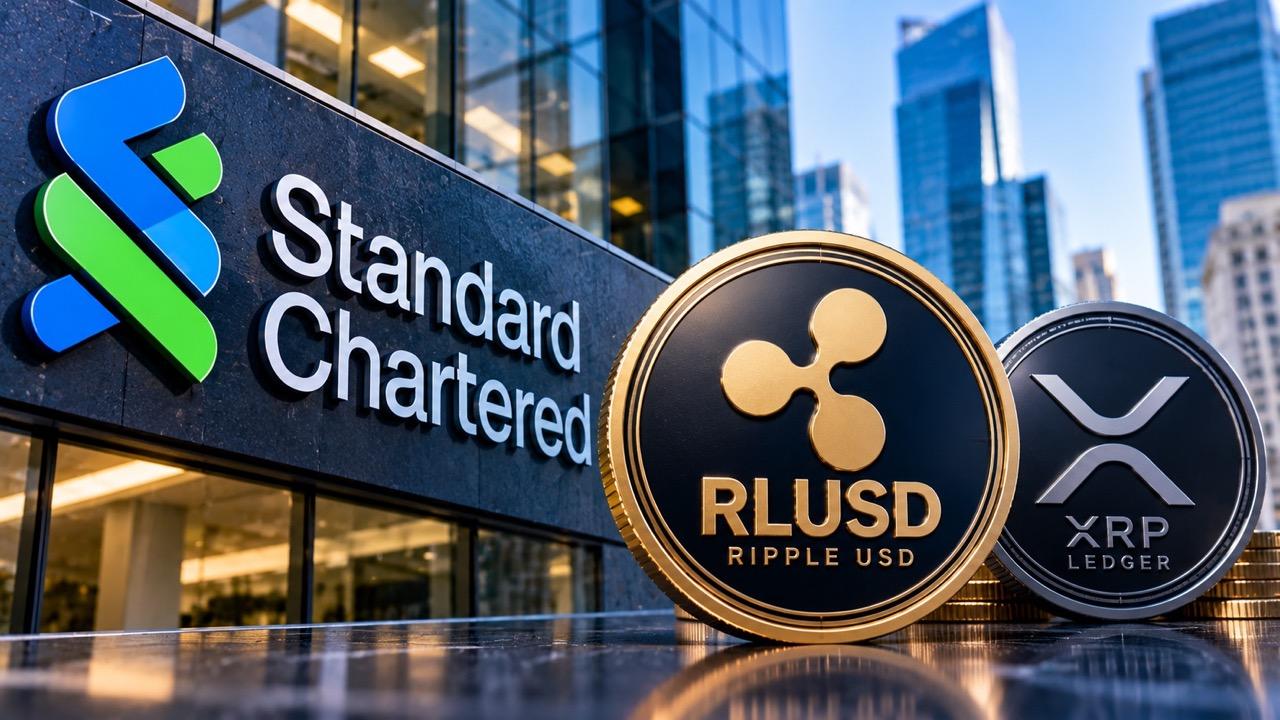
- Standard Chartered has launched custody services for Ripple's RLUSD stablecoin on the XRP Ledger, while a planned partnership with LMAX Group aims to let institutional clients use eligible holdings as trading collateral without transferring the tokens to the trading venue.
Standard Chartered has launched institutional custody for Ripple USD (RLUSD) on the XRP Ledger, expanding its digital-asset services as financial institutions develop infrastructure for stablecoin trading and settlement. The bank announced on October 12 that eligible clients can access the service through its Dubai International Financial Centre (DIFC) branch, which is regulated by the Dubai Financial Services Authority.
The launch gives institutional clients access to the bank's custody infrastructure for RLUSD, a US dollar-pegged stablecoin issued by Ripple. The official announcement also outlined plans to integrate the stablecoin into certain trading and collateral-management services offered by LMAX Group.
The move comes as banks and financial firms expand services for digital assets beyond buying, selling and safekeeping. Standard Chartered has also been developing its broader institutional crypto business, including plans to expand digital-asset custody services in Singapore, announced earlier in October.
How Standard Chartered's RLUSD Custody and LMAX Partnership Will Work
The custody service is already live, but the planned collateral integration with LMAX Group remains subject to further implementation steps. Under the proposed arrangement, eligible RLUSD held with Standard Chartered could serve as collateral for agreed LMAX Group products without the underlying tokens being transferred directly to the trading venue. The bank's collateral-mirroring model would allow the value of eligible assets held in custody to be recognized by LMAX for trading purposes.
Standard Chartered said the structure is intended to give institutional clients greater flexibility in deploying digital assets while reducing transfer-related operational risks and improving the management of counterparty exposure. The additional capabilities remain subject to final documentation, testing, applicable laws and regulations, internal approvals and jurisdictional readiness. The bank did not provide a launch date.
The arrangement builds on an existing relationship between Ripple and LMAX Group. The companies announced a multi-year partnership in January 2026 to expand institutional use of RLUSD across LMAX's trading infrastructure.
Collateral is an asset pledged to secure financial obligations or trading positions. Allowing institutions to keep assets with a custodian while using their value for trading could reduce the need to move tokens between platforms. However, the extent of any operational or capital-efficiency benefits will depend on the final implementation and the terms governing eligible collateral.
The XRP Ledger provides the blockchain infrastructure supporting RLUSD in this arrangement. The network is designed to facilitate digital-asset transfers and settlement, while RLUSD is intended to maintain a value equivalent to one US dollar.
What the RLUSD Launch Means for Institutional Crypto Adoption
Standard Chartered's launch gives eligible institutional clients another option for holding RLUSD within a bank's custody infrastructure. It also connects the stablecoin with a proposed trading-collateral arrangement involving a regulated banking operation and an institutional trading group.
For Ripple, the development adds another institutional use case for RLUSD beyond transfers and payments. Stablecoins can also be used to move value between trading venues, settle transactions and support collateral-management processes, although specific uses depend on the services and rules established by participating firms.
LMAX Group operates institutional trading infrastructure across foreign exchange and digital assets. Its planned integration with Standard Chartered is intended to let clients use eligible RLUSD holdings in agreed products while maintaining custody with the bank.
The development also follows Standard Chartered's wider expansion into digital-asset services. The bank has been increasing its involvement in institutional crypto custody and related infrastructure as financial firms seek arrangements that combine access to digital markets with established custody and risk-management processes.
The October 12 announcement does not mean that every RLUSD holder can access the service. It is designed for eligible institutional clients, and the additional LMAX collateral capabilities have not yet launched.
For now, the key development is the launch of custody support for RLUSD on the XRP Ledger. The next milestone will be the completion of the planned collateral integration, subject to regulatory requirements, testing and approvals.