
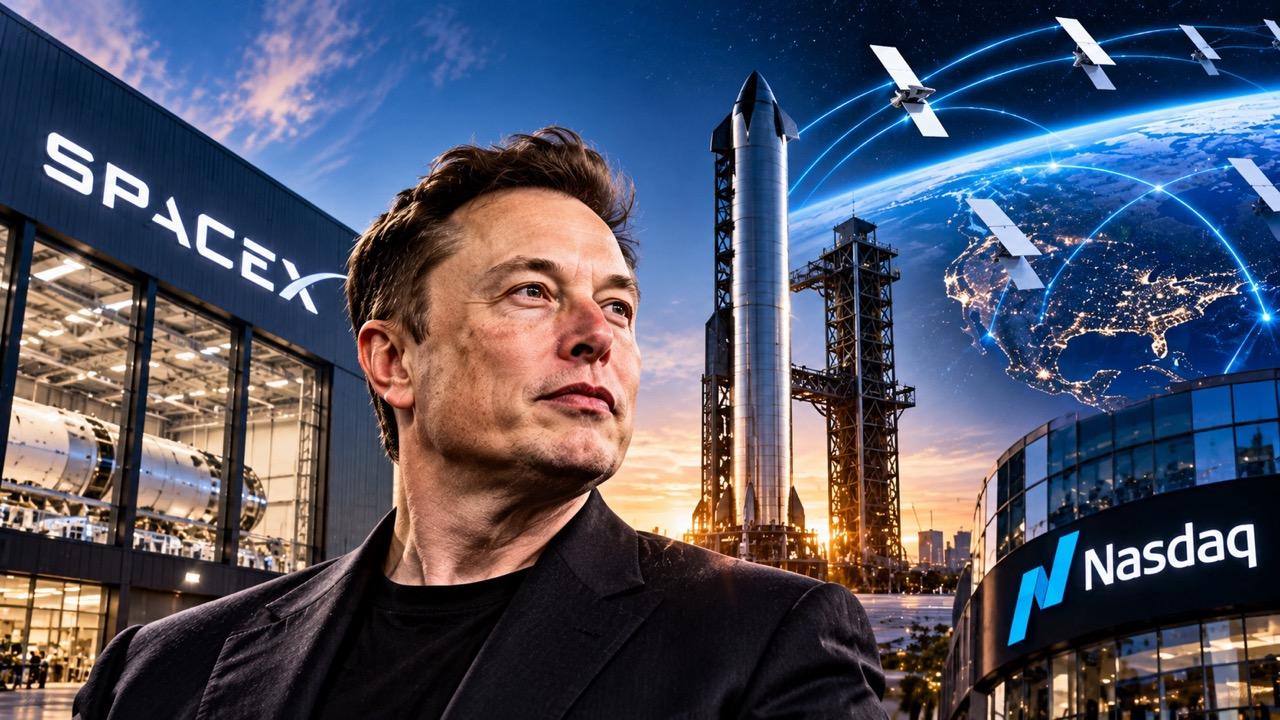
SpaceX (NASDAQ: SPCX) reported $4.4 billion in third-quarter net income as revenue surged 161% to $14.58 billion, marking its first profitable quarter since going public. Strong AI infrastructure demand and Starlink growth helped lift results, but heavy capital spending and a roughly $2 trillion market valuation leave investors weighing how much future growth is already reflected in the stock price.
Elon Musk’s SpaceX has delivered a major financial milestone just months after its June 2026 initial public offering. The company’s third-quarter earnings release showed that revenue more than doubled from a year earlier, while net income swung from a loss to a multibillion-dollar profit.
Shares closed Tuesday, October 20, at $147.79 before climbing about 7.5% in after-hours trading following the results, and an after-hours gain of about 8%. The stock remains above its $135 IPO price but below its post-listing peak.
The earnings report strengthens the case that SpaceX is becoming more than a rocket-launch business. Yet the financial results also show how heavily the company is investing to expand its artificial intelligence operations. Investors considering SPCX therefore need to look beyond the headline profit and assess whether future earnings can support the valuation.
SpaceX’s Q3 Profit Was Driven by AI and Starlink
SpaceX generated $14.58 billion in revenue in the third quarter, up 161% from the same period a year earlier. Net income reached $4.4 billion, compared with a $1.1 billion loss in the third quarter of 2025. The company had also recorded a $541 million loss in the second quarter of 2026.
The biggest change came from its artificial intelligence and computing business. Reuters reported that revenue from the unit, which SpaceX calls Super Intelligence, rose to $7.56 billion as customers rented computing capacity for AI workloads. That was almost ten times the level recorded a year earlier and made AI SpaceX’s largest revenue business in the quarter.
The results suggest that demand for computing infrastructure is now an important part of the investment thesis. However, investors should distinguish revenue growth from the long-term profitability of the business. Rental demand and pricing could change as more computing capacity becomes available or customer spending slows. Wealthier Today previously covered questions surrounding SpaceX’s AI business and its valuation.
Starlink remains another major contributor. The satellite internet business reached 13.6 million subscribers in the third quarter, exceeding the 12.19 million analysts expected, Reuters reported. The broader connectivity segment generated approximately $5.2 billion in revenue, with Starlink serving consumer, enterprise, aviation, maritime and government customers.
The traditional space business generated about $1.8 billion in revenue, up 6% year over year, according to Reuters. That slower growth highlights the company’s changing revenue mix: AI computing and satellite connectivity are expanding while rocket-related operations grow at a more modest pace.
Profitability, however, does not mean SpaceX has stopped spending heavily. Capital expenditures reached $19.6 billion in the third quarter, nearly triple the year-earlier level. Chief Financial Officer Bret Johnsen said the company expected capital expenditure to rise to between $35 billion and $40 billion in the fourth quarter.
Those investments could support future growth, but they also raise the amount of revenue SpaceX must generate to justify its spending. Investors evaluating SPCX should monitor cash generation alongside reported net income rather than assuming that one profitable quarter establishes a stable earnings trend.
Is SPCX Stock a Buy After Turning Profitable?
SpaceX’s latest results strengthen its growth story, but they do not automatically make the stock inexpensive. Its market value has been around $2 trillion, leaving investors paying a substantial valuation for a company whose earnings mix and capital requirements are changing quickly.
The shares’ recent trading history also matters. SpaceX priced its IPO at $135 in June and initially surged after entering the public market. Its closing price of $147.79 on October 20 was about 9.5% above the offering price, but it remained well below the highs reached after the debut. A stock falling from a peak is not necessarily undervalued; the price still has to be measured against the earnings and cash flow the business can realistically deliver.
There are plausible reasons for optimism. Starlink is expanding its customer base and SpaceX’s computing business is benefiting from demand for AI capacity. The company also has a major position in commercial launches and satellite deployment. Some investors see those businesses as grounds for further long-term growth, while previous forecasts for SpaceX stock show how much bullish valuation scenarios depend on the company expanding well beyond its established operations.
The risks are equally material. AI computing prices could fall as supply increases. SpaceX’s planned capital spending is enormous, and Starship still needs to demonstrate reliable operations at scale. Its newer public-market history also gives investors limited evidence of how the stock may behave through a full range of market conditions.
A potential SpaceX-Tesla combination adds another uncertainty. On Tuesday, Musk confirmed that independent committees at SpaceX and Tesla had begun discussing a merger, but he said no terms had been agreed and a deal might never happen. Reuters’ report on the earnings and merger discussions makes clear that the talks are preliminary, so investors should not treat a transaction as a guaranteed source of value.
Is it time to buy SPCX? The latest quarter gives investors stronger evidence of SpaceX’s earnings potential, but one profitable quarter does not settle the valuation question. Investors with a high tolerance for volatility may see potential in its mix of AI computing, Starlink, and launch services. More cautious investors may prefer to wait for evidence that profits and cash flow can keep pace with the company’s capital spending.
The key test is whether SpaceX can sustain its earnings growth and earn adequate returns on its expanding infrastructure. Until that becomes clearer, the latest results are an important positive signal rather than a standalone buy signal.