
- Silver has suffered a sharp September pullback, but a combination of supply deficits, investment demand and a potential shift in interest-rate expectations could give the metal another path toward $70.
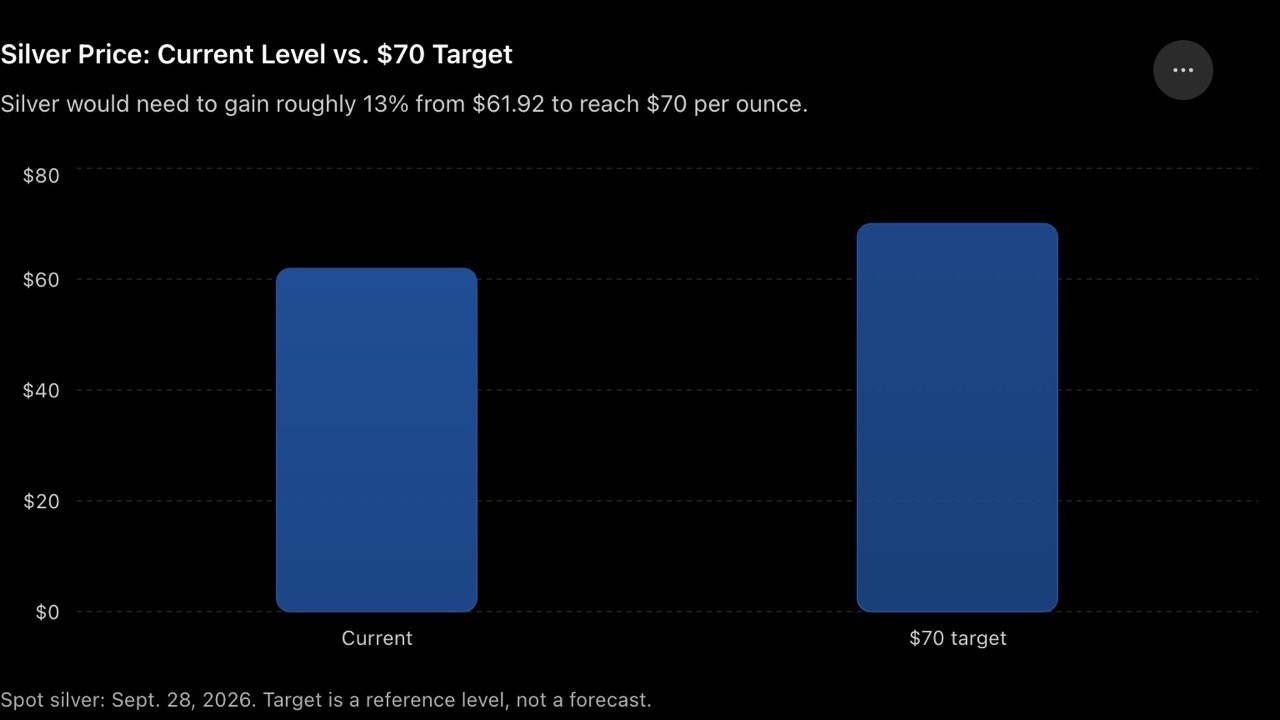
Silver has entered the final days of September under heavy pressure, with spot prices falling to around $62 an ounce after trading materially higher earlier in the year. Kitco showed spot silver at $61.92 per ounce on Sept. 28, down $2.25 on the session. The latest decline has come as higher Treasury yields, a stronger dollar and expectations for additional Federal Reserve tightening have weighed on precious metals.
That has put the $70 level back into focus. From around $61.92, silver would need to rise roughly 13% to reach $70. That is a significant move, but it is not outside the range of moves the metal has produced during 2026's unusually volatile trading. The bigger question is whether the forces currently pushing silver lower remain in place through the final quarter.
Higher Rates Are Creating A Near-Term Headwind
Silver does not pay interest, which makes the metal particularly sensitive to changes in real yields and expectations for monetary policy. J.P. Morgan Global Research cut its 2026 silver forecast in August, reducing its expected annual average to about $70 an ounce from $84 previously. Its forecast puts the fourth-quarter average at $63, suggesting the bank does not currently expect a rapid return to the highs seen earlier in the year.
The bank cited an unwinding of physical-market tightness, weaker industrial demand and the prospect of higher global interest rates. It also expects the gold-to-silver ratio to move toward more traditional levels as monetary conditions remain restrictive.
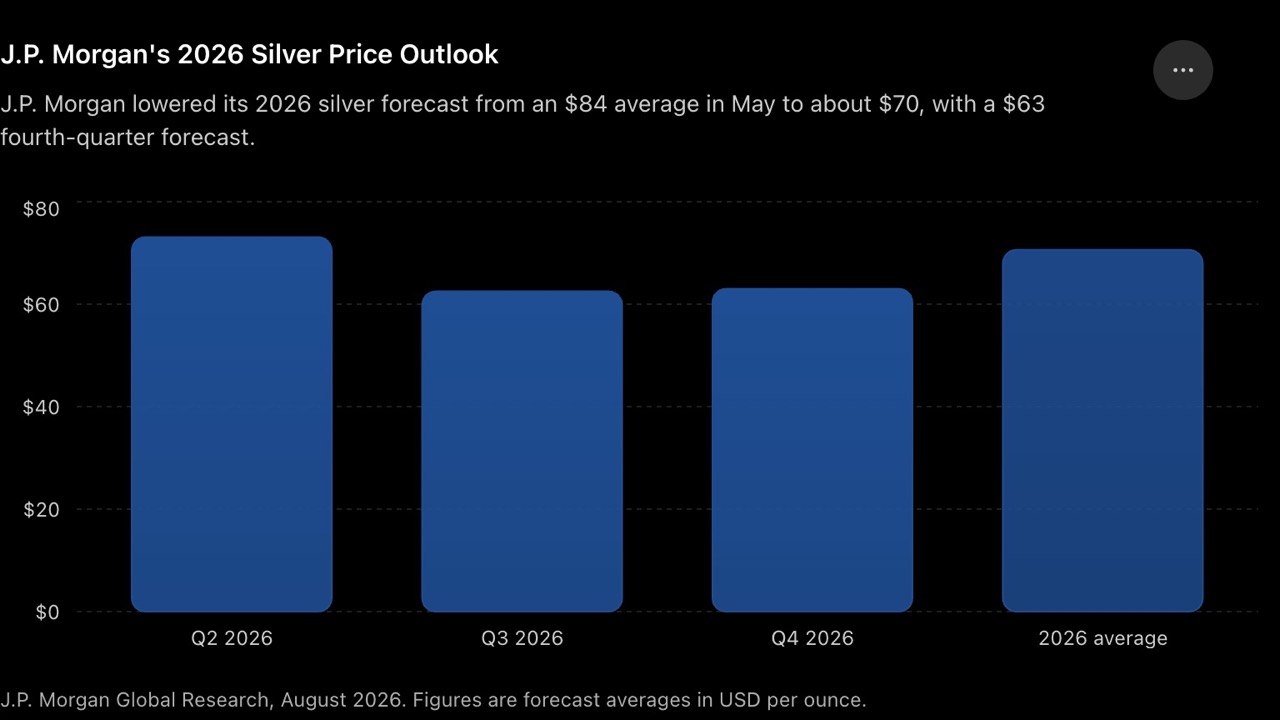
The latest market move shows why that forecast is relevant. Silver has struggled as Treasury yields climbed and traders increased expectations for additional Federal Reserve rate increases.
The US dollar is another variable. A stronger dollar generally makes dollar-denominated commodities more expensive for international buyers, adding another source of pressure when investors are already reducing exposure to precious metals.
Oil prices are also complicating the outlook. Higher energy prices can reinforce inflation concerns, potentially keeping central banks more cautious about cutting rates. For silver to regain momentum, investors will therefore be watching inflation data, employment figures, Treasury yields and the dollar alongside the metal's own technical levels.
The $70 Case Depends On More Than The Fed
The bearish macro backdrop does not eliminate the longer-term arguments supporting silver. The Silver Institute expects the global silver market to remain in deficit for a sixth consecutive year in 2026. Its February outlook projected a 67 million-ounce deficit, while physical investment was expected to rise 20% to 227 million ounces.
The supply picture is important because silver production cannot quickly respond to higher prices. Much of the world's silver is also produced as a byproduct of mining other metals, limiting how rapidly primary silver supply can increase.
Industrial demand remains more complicated. The Silver Institute expects industrial fabrication to decline in 2026, largely because photovoltaic manufacturers are using less silver per unit and increasingly substituting other materials.
At the same time, demand linked to electronics, automotive applications, power infrastructure and artificial intelligence provides longer-term support. Near-term monetary conditions are unfavorable, but the physical market remains relatively tight.
Institutional forecasts also show that $70 remains within the range of plausible outcomes. UBS said in September that it expects silver to reach $70 an ounce by December 2026, followed by forecasts of $75 in March and June 2027 and $80 by September 2027.
The LBMA's 2026 analyst survey is also substantially higher, with an average silver forecast of roughly $79 an ounce, although the forecast range is exceptionally wide, highlighting the uncertainty surrounding silver after its huge moves earlier this year.
For investors watching the $70 level, the key issue is not simply whether silver can bounce from around $62. A sustained recovery would likely require some combination of lower rate expectations, easing Treasury yields, a softer dollar, and continued investment or industrial demand.
If those conditions develop, a move back toward $70 would not require silver to revisit its earlier highs. If rates remain elevated and industrial demand weakens further, however, the metal could remain below that level for longer.
For now, silver sits at a crossroads between a difficult macroeconomic backdrop and supply-demand fundamentals that continue to provide longer-term support.