
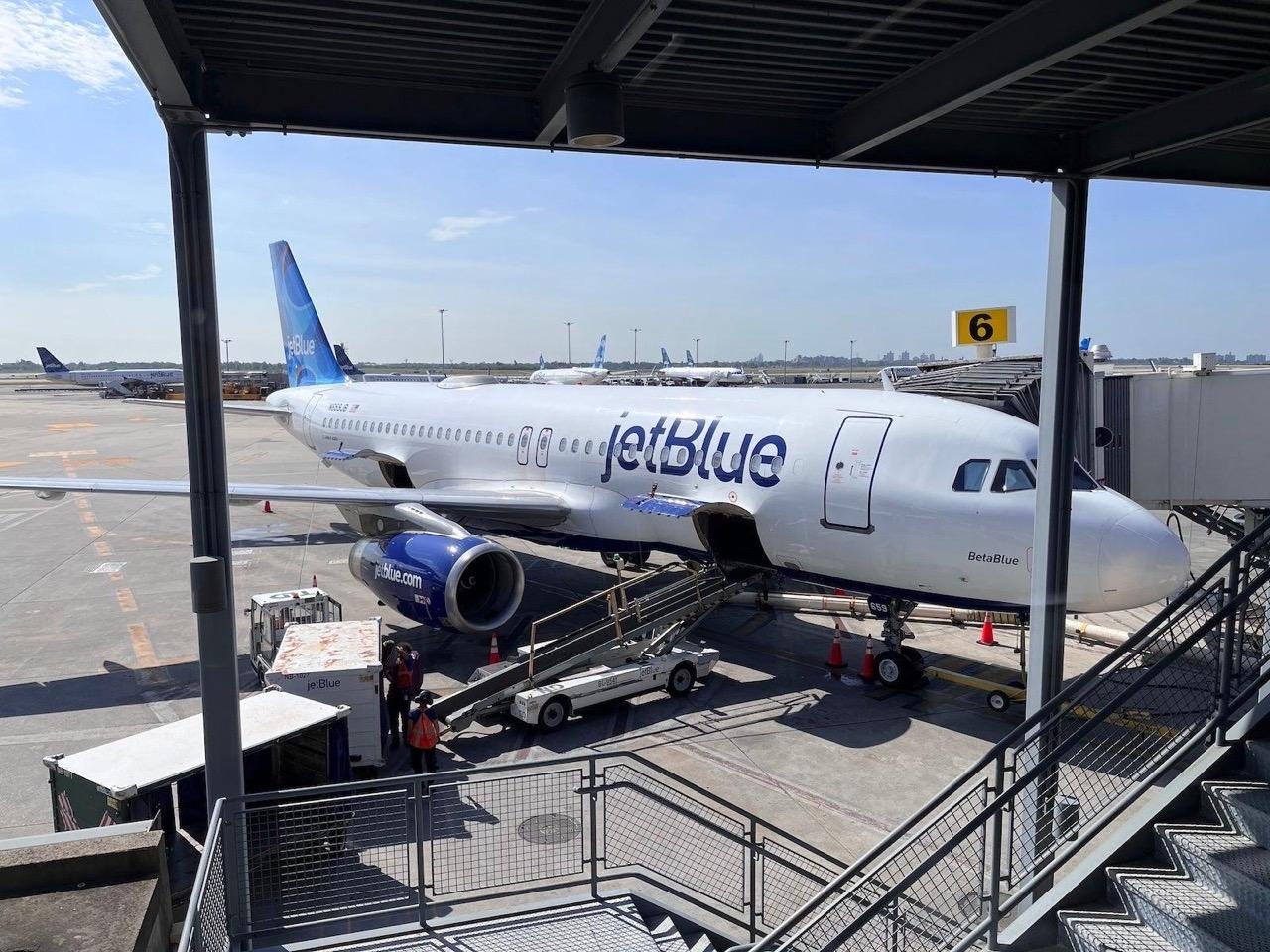
JetBlue is once again dominating airline headlines after announcing another network adjustment and capacity shift, underscoring the difficult operating environment facing U.S. carriers as rising costs, changing travel demand, and aggressive competition force airlines to rethink their growth strategies. The move comes just weeks after Southwest Airlines announced cuts to major routes in the US, fueling investor concerns that the airline industry may be entering another period of restructuring.
JetBlue Manchester Exit Reflects a Capacity Reset
JetBlue (NASDAQ: JBLU) is making one of its clearest network pivots in years, leaving Manchester-Boston Regional Airport after just 17 months while pouring more aircraft, employees, and capacity into Fort Lauderdale. The move underscores how the carrier is trying to protect margins in a tough cost environment. It also shows how quickly airline networks can change when a focus city suddenly opens up. For JetBlue, that opening came after Spirit Airlines’ collapse and the resulting gate availability in South Florida.
JetBlue revealed earlier this year that it would end service on a small number of underperforming routes and redeploy aircraft to markets with stronger customer demand. For Manchester, that became a reality as JetBlue’s last flight out of the city departed on July 8, ending a service that began in January 2025.
JetBlue’s Manchester experiment lasted only about 17 months, a short run for a US airline route strategy. According to local reporting, the carrier had launched service with daily Orlando flights and seasonal service to Fort Myers and Fort Lauderdale, but those routes never grew enough to justify keeping aircraft there.
That matters because airlines do not earn money simply by adding cities. They earn money by putting planes where fares, traffic, and aircraft utilization line up. JetBlue’s own investor materials show why capacity is so central to the story. In its late-April investor update, the airline projected second-quarter 2026 capacity growth of roughly 1.5% to 4.5% and revenue per available seat mile, or RASM, growth of 7% to 11%. In its revised guidance, the company later raised the capacity range to 2% to 4% and the RASM outlook to 9% to 12%.
The airline pulling out of Manchester has financial implications for users, leaving local travelers with fewer low-fare options, while JetBlue doubles down on a market it believes can produce better returns. The airport itself gave a useful clue about why the market may not have been large enough. One report cited passenger traffic rising 4.75% in the year to April, while scheduled departures increased 8.60% over the same period. That mismatch suggests airlines were adding seats faster than demand was growing, which can put pressure on fares and aircraft economics.
JetBlue also appears to have been affected by a broader industry reality. Fuel remains expensive due to tensions in the Middle East, and smaller or lower-yield routes are often the first to be trimmed when costs rise. The airline’s outlook called for fuel prices of about $4.13 to $4.28 per gallon in one update and $4.26 to $4.36 in a later revision, reinforcing how sensitive the business remains to fuel volatility.
Fort Lauderdale Becomes JetBlue’s New Growth Engine
While JetBlue was winding down in Manchester, it was aggressively building in South Florida. The airline said it was increasing Fort Lauderdale service from about 130 daily flights to roughly 150 by year-end, with more than 55 nonstop destinations and around 370 connecting opportunities.
This move aims at rebuilding JetBlue’s own network around a city where the airline sees scale advantages. JetBlue CEO Joanna Geraghty has described Fort Lauderdale as a cornerstone of the carrier’s network, and more flights mean more connecting itineraries, better aircraft utilization, and a larger local brand presence.
There is also a labor angle for the airline JetBlue, which has been hiring across multiple workgroups in Fort Lauderdale, including former Spirit employees, local reporting shows. For now, JetBlue looks to be trying to stay affordable, but it is not promising Spirit-level pricing. This distinction matters because Spirit’s collapse removed one of the most aggressive low-cost competitors from the South Florida market. So, if JetBlue can hold pricing while keeping its higher-service model intact, it may win business from former Spirit customers without fully matching ultra-low-cost fares.
Market activity
JetBlue Airways Corporation
Market data and charting provided by TradingView. Data may be delayed depending on exchange availability.