
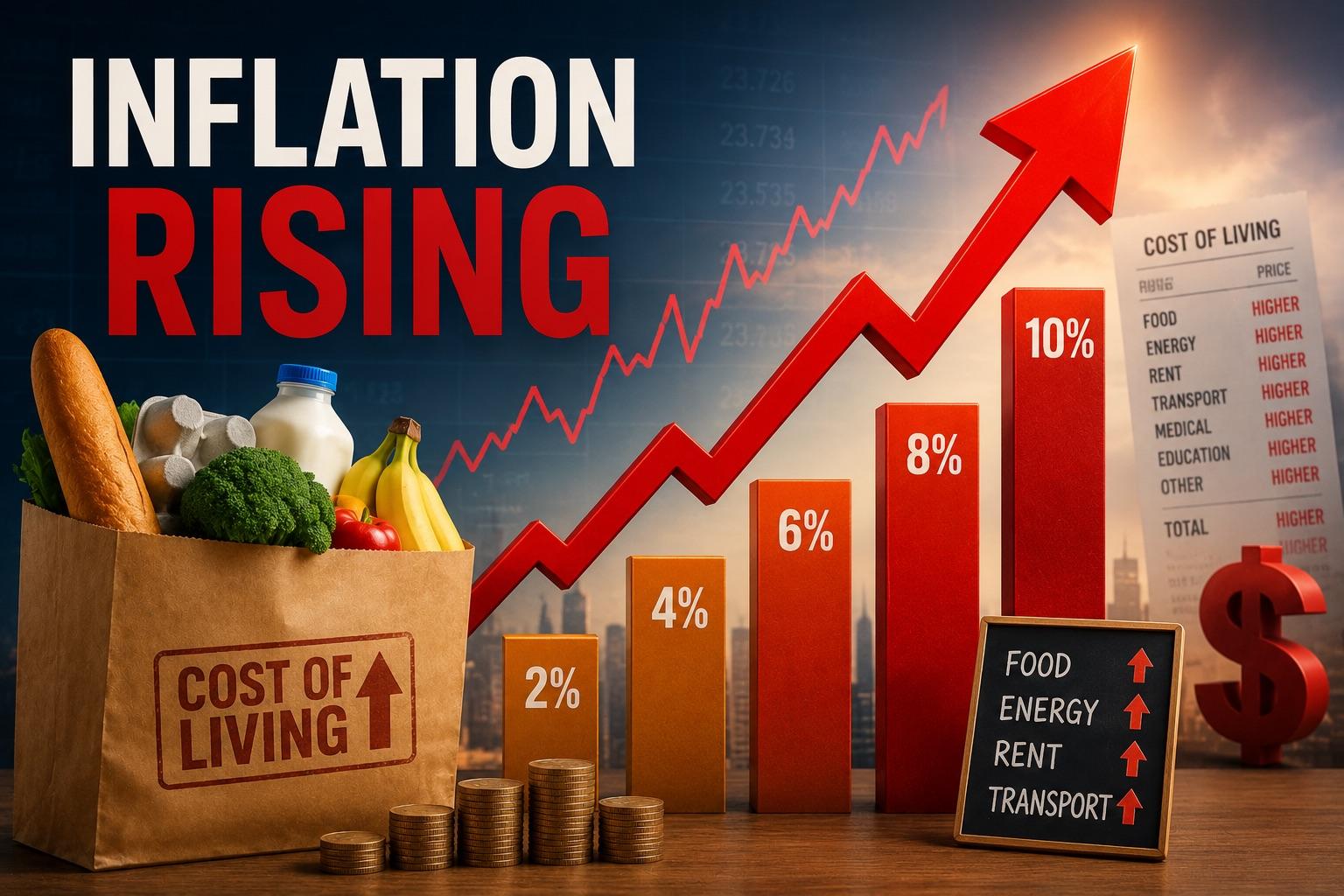
Inflation rates have remained steady in the United Kingdom (UK) while accelerating sharply in the United States, underscoring the different challenges facing the world's two largest Western economies. Fresh data released Wednesday showed that UK consumer prices rose 2.8% annually in May. This matched economists' expectations from the previous month despite concerns that rising energy costs and geopolitical tensions could reignite price pressures.
Across the pond, the story is different as the latest U.S. Consumer Price Index report indicated that annual inflation accelerated from 3.8% to 4.25%. This move marks a significant rebound that has complicated expectations for Federal Reserve interest rate cuts later this year.
The stark differences in inflation numbers come at a time when central banks are attempting to balance economic growth with price stability. On the other side, investors are increasingly assessing whether the Bank of England and the US Federal Reserve will need to pursue different policy paths that fit in with their inflation figures.
Inflation Remains Sticky Despite Global Economic Uncertainty
The latest UK data offered some relief to policymakers concerned about the impact of geopolitical tensions and higher energy prices on household budgets. According to the UK's Office for National Statistics, although inflation remained at 2.8%, slightly above the Bank of England's 2% target, it remains well below the peaks experienced during the post-pandemic surge of 11.1% reached in 2022. Amid this, food prices have also remained stable, and service costs staying low have helped relieve some of the pressure felt from fuel and transportation expenses.
“While the war in the Middle East pushes prices up globally, we have the right economic plan, and inflation has held steady. We’re protecting families and businesses from rising costs, with cuts in energy bills and freezes in fuel duty and rail fares,” Chancellor Rachel Reeves said.
Nevertheless, despite the steady reading, policymakers remain cautious. This is because Bank of England officials have repeatedly warned that underlying inflation pressures remain elevated in certain parts of the economy, particularly in wages and services. So, even though the figures are staying steady now at 2.8%, there is still a high chance that the figures could accelerate, similar to what is being experienced in the US.
U.S. Inflation Surge Challenges Federal Reserve Outlook
The latest figures from the U.S. Bureau of Labor Statistics show that inflation accelerated to 4.25% exceeded many forecasts. This has understandably moved investors to reassess expectations for Federal Reserve policy. Unlike the UK, where there has been a marked decrease in things like food and transportation, the US has experienced the opposite. For example, there are transportation expenses in the US now, while things like housing costs and energy prices continue to rise in tandem. All of these contribute to the rising inflation numbers recorded in May.
For now, the Federal Reserve, under the new leadership of Chairman Kevin Warsh, is expected to keep interest rates the same following Wednesday’s FOMC meeting. However, the rising inflation may soon force the Fed’s hand and policymakers to implement a stringent monetary policy for longer than previously expected.
Figures from the U.S. Bureau of Labor Statistics (BLS) showed that real average hourly earnings for employees saw a 0.1% decline in May. Then the Consumer Price Index on all items saw a 0.5% increase in the same month. PPI data released on June 11 showed a 1.1% increase in final demand advances. Services rose 0.3%, but the highest increase was in goods, which rose by 2.8%.
As markets await the next policy meetings from both the Federal Reserve and the Bank of England, investors should continue to monitor economic data for signs of whether current price pressures represent a temporary setback or the beginning of a more sustained rise in inflation. The major things to watch now include interest rates, borrowing costs, investment returns, and economic growth prospects.