

- French public debt reached €3.596 trillion in the second quarter, or 119% of GDP, according to INSEE, while higher bond yields are increasing the cost of servicing the debt ahead of another projected increase in 2027.
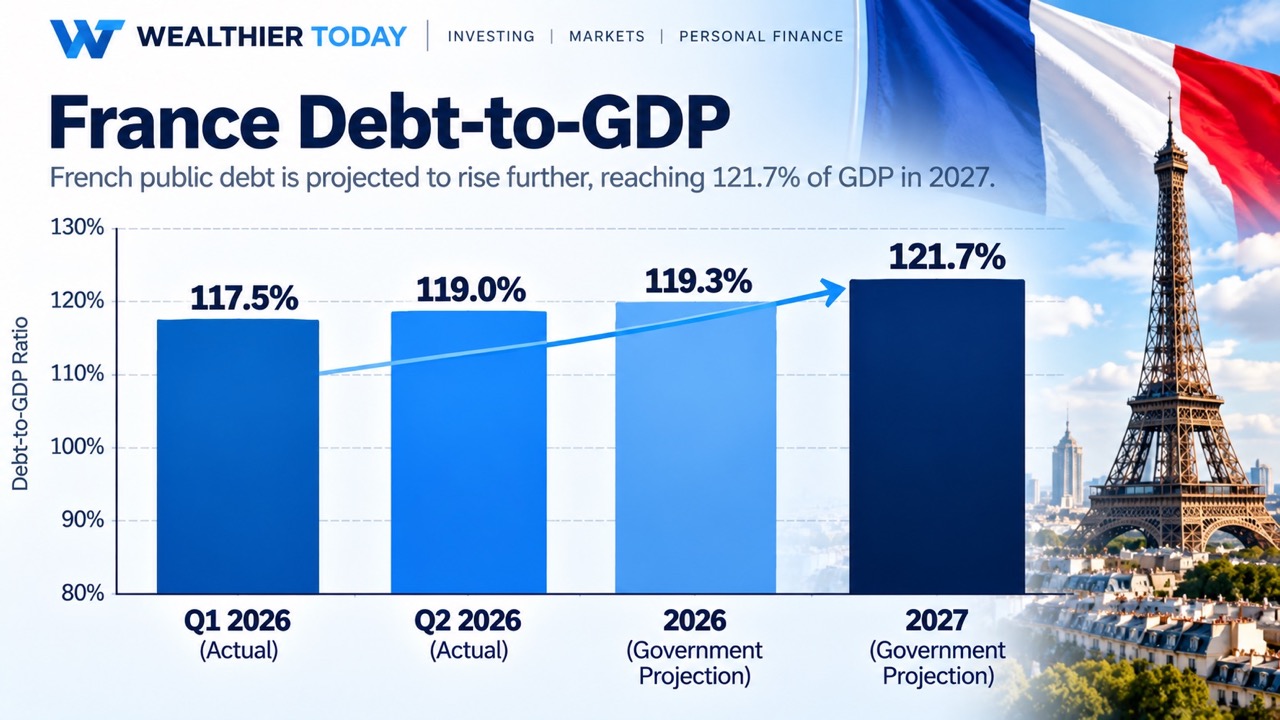
France’s public debt climbed to €3,595.5 billion at the end of June, equivalent to 119% of GDP, according to new data from the country’s statistics agency, INSEE. The latest figure marks an increase from 117.5% of GDP in the first quarter, when debt stood at €3,536.1 billion.
The second-quarter increase was driven primarily by central government borrowing. The state added about €53 billion to its debt during the three months, while social-security administrations added €8.4 billion. Local governments reduced their debt by €1.7 billion, according to the data reported by AFP and France24’s coverage of the INSEE release. The latest reading puts France’s debt at its highest level as a share of GDP since 1946.
The increase also reinforces the debt trajectory already outlined by the French government. The Finance Ministry expects the debt-to-GDP ratio to reach 119.3% in 2026 and 121.7% in 2027, according to figures published earlier this month. The government is also targeting a 5.4% budget deficit in 2026 and has proposed €54 billion of savings in its 2027 budget plans.
France is not the most indebted eurozone country by debt-to-GDP ratio; Greece and Italy remain above it. INSEE data based on Eurostat figures put France’s 2025 ratio at 115.6%, compared with 81.7% for the EU as a whole.
French Bond Yields Add to the Debt Burden
The debt increase is occurring as investors demand higher yields to hold French government bonds. France’s 10-year government bond yield reached about 4.76% on Sept. 29, its highest level since 2008, according to Reuters. The move has contributed to a widening gap with German government debt, with the French-German 10-year spread remaining around or above one percentage point.
The higher yield matters because France must regularly refinance existing debt while issuing new bonds to cover budget deficits. As older, lower-cost debt matures and is replaced with borrowing at higher rates, interest expenses can increase even without a new acceleration in the debt stock.
The OECD has warned more broadly that elevated government bond yields are increasing debt-service costs across advanced economies. Its latest assessment said benchmark G7 borrowing costs have risen to levels not seen since before the global financial crisis.
The pressure is particularly relevant for France because its debt stock is already large and continues to rise. The French government expects annual interest costs to reach about €91 billion in 2027, according to the figures cited by AFP. That would make debt servicing one of the largest items in the public budget. Le Monde reported that the interest burden is expected to be around €79 billion in 2026 before rising further next year.
The higher borrowing costs are also arriving during a broader global bond selloff. Rising US Treasury yields and pressure across global government bond markets have reflected higher energy prices, inflation concerns and increased government borrowing, adding to the pressure on sovereign debt markets internationally.
For France, however, domestic fiscal concerns are an additional factor. The premium investors demand over German debt reflects not only the broader global increase in yields but also concerns about the country's fiscal trajectory, according to Reuters.
The issue is becoming more important as the government prepares its 2027 budget, which is expected to include the €54 billion savings effort. The proposal will be closely watched by bond investors because the debt ratio is already projected to rise further next year.
The political calendar adds another layer to the timing. France is heading toward its 2027 presidential election, but the debt figures themselves do not establish how markets will respond to individual political outcomes or proposals.
What the data clearly show is that France is entering the next budget cycle with a larger debt stock and higher borrowing costs. The second-quarter figure of €3.596 trillion represents a rise of roughly €59.4 billion from the first quarter. With debt already at 119% of GDP and the government projecting 121.7% in 2027, the cost of financing that debt is becoming increasingly important to public finances.
The key numbers to watch are therefore the pace of new borrowing, the government's ability to reduce its deficit and the interest rate France must pay when it returns to bond markets.