
On June 23, 2026, Reuters reported that South Korea’s benchmark index (KOSPI) fell nearly 10% after regulators cautioned on leveraged ETFs tied to the country’s chip leaders. The selloff was amplified by concentrated exposure to Samsung Electronics and SK Hynix, heavy retail participation, and forced de-risking.
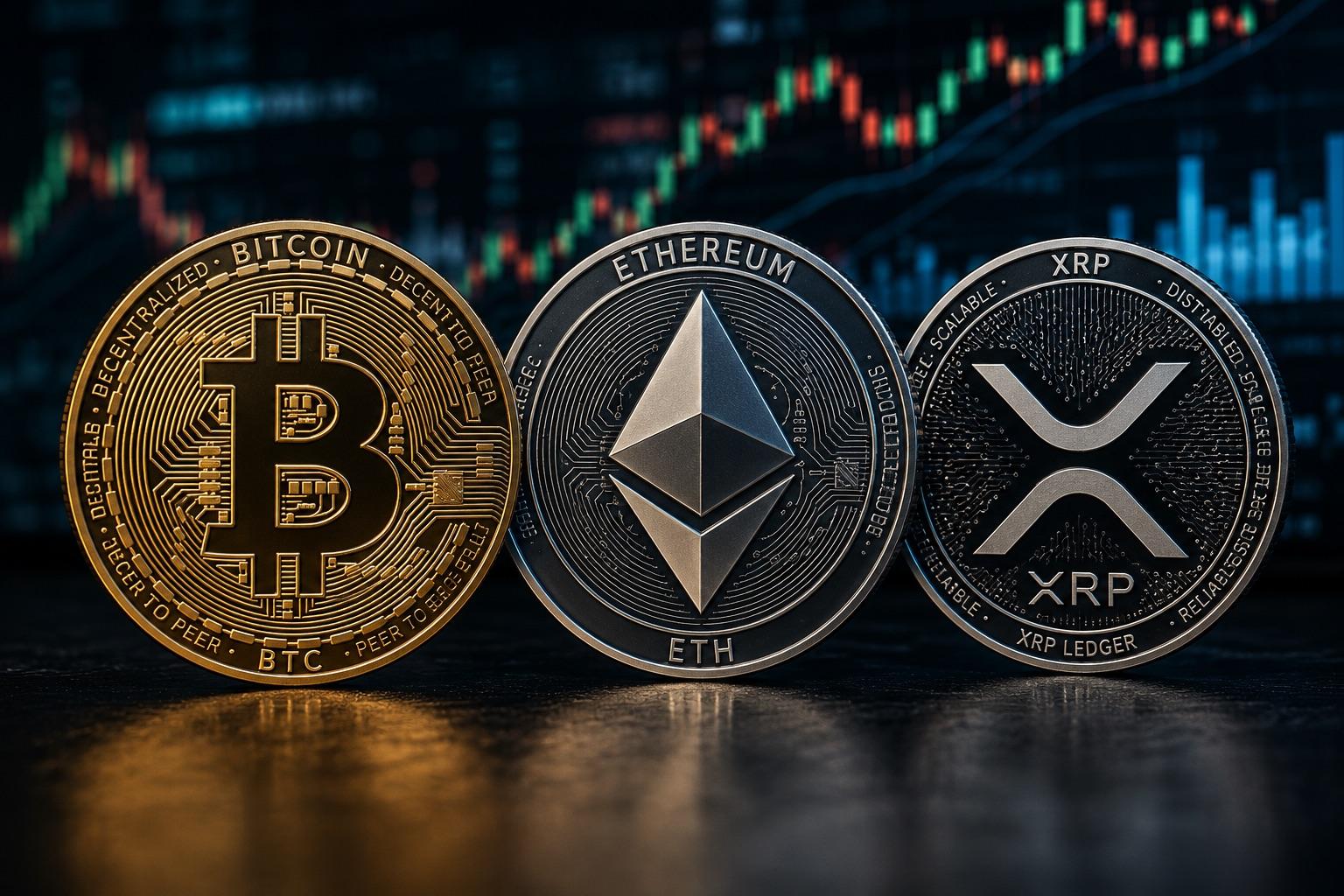
On the other end of the spectrum, the move matters for crypto because Bitcoin, Ethereum, and XRP often feel the pressure first when investors pull back from speculative trades. But the key question is not whether a South Korean equity move mechanically causes a crypto crash, but whether the KOSPI episode shows how quickly crowded positioning can unwind when leverage, margin, and momentum are all stretched taut.
Bitcoin, Ethereum, And XRP Feel The KOSPI Crash
The KOSPI closed at 8,203.84, down 9.99% on June 23, after South Korea’s financial watchdog warned that leveraged single-stock ETFs were adding to volatility. The Korea Herald reported that foreign investors were net sellers while retail buyers stepped in, but even that could not stop the decline.
There is also a direct behavioral link, as South Korean investors are a major source of activity in both domestic equities and digital assets, and local regulators have repeatedly warned about leverage. The Financial Supervisory Service said on June 22 that it was considering safeguards after single-stock leveraged ETFs tracking Samsung and SK Hynix became extremely active. Apparently, the regulator regretted allowing the products for trading so quickly, and that same caution is relevant for crypto because the same leverage mindset often spills over between asset classes.
Market activity
Korea Composite Stock Price Index
Market data and charting provided by TradingView. Data may be delayed depending on exchange availability.
This is because the pattern is familiar to crypto traders. When the markets get crowded, the first unwind usually hits the most leveraged and most liquid risk assets. Bitcoin is often sold alongside growth stocks because it sits at the intersection of macro speculation, ETF flows, and leveraged trading. Then Ethereum and XRP can move more sharply after it because they tend to have deeper retail participation and thinner support when sentiment weakens and Bitcoin slides.
For Bitcoin, the near-term implication of the KOSPI crash is that global investors could interpret the selloff as another sign that AI and semiconductor trades are crowded. This may cause them to trim their exposure to correlated risk assets. If that happens during weak US tech sessions or rising Treasury yields, then Bitcoin, Ethereum, and XRP could face a second wave of selling from macro funds rather than just crypto-native traders.
On its part, Ethereum and XRP may be even more sensitive if risk appetite cools. This is because Ether tends to underperform during broad de-risking phases when traders rotate away from higher-beta assets. XRP, on the other hand, often reacts quickly to sentiment shifts because its price can be heavily driven by momentum and liquidity conditions rather than only fundamental use-case news.
Crypto Market Walking Off The Decline
The most important signal is whether the KOSPI move turns into a broader liquidity event or remains an isolated correction in Korea’s stock market. So far, South Korean tech stocks, especially Samsung and SK Hynix, have been central to the damage. If those shares stabilize, the crypto may find relief too, and Bitcoin, Ethereum, and XRP could keep recovering. However, if these tech stocks keep falling, then risk appetite could stay under pressure, and Bitcoin, Ethereum, and XRP could crash in response.
A KOSPI drop does not change Bitcoin’s supply schedule, Ethereum’s network activity, or XRP’s settlement narrative. However, a weaker Nasdaq usually hurts crypto sentiment first, especially when traders are already nervous about leverage. Nevertheless, it is also worth separating short-term noise from the long-term trend. Sometimes the market can be tumultuous, but it may last only for a short time.
Market activity
Bitcoin
Market data and charting provided by TradingView. Data may be delayed depending on exchange availability.