
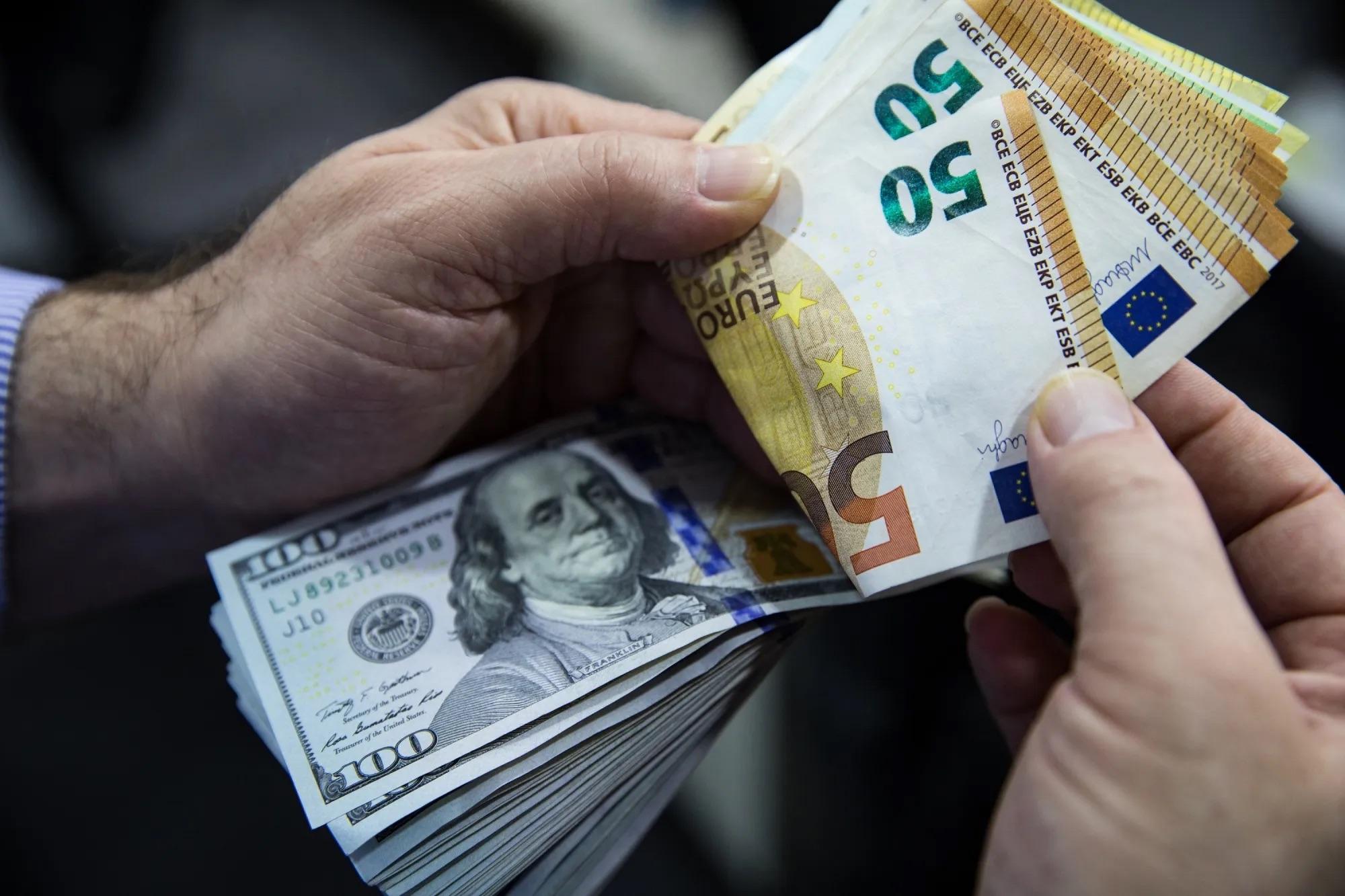
The US Dollar has extended its recovery on Monday, as traders welcome a softer stance from European Central Bank President Christine Lagarde, renewed geopolitical uncertainty, and a Federal Reserve that is still signaling restrictive policy. The move has helped the dollar hold near recent highs against major peers, while the euro has slipped back after Lagarde said there was “no evidence yet” that inflation in the euro area was de-anchoring in a way that would justify stronger action from the European Central Bank (ECB).
The US Dollar is also drawing support from safe-haven demand as investors watch developments in the Middle East, including the US-Iran talks and the Strait of Hormuz situation. Both of these situations have since kept energy and inflation risks in focus, making them the focal point for investors. But amid this, the dollar held firm as traders monitored those tensions, and the Chinese Yen has remained near multi-decade lows.
US Dollar Strength Is Being Driven By Better Rates
Presently, what is providing the most important support for the US Dollar is the interest-rate expectations. The Federal Reserve left its benchmark rate unchanged on June 17, 2026, keeping the federal funds target range at 3.50% to 3.75%, according to the Fed’s own statement on June 17. But the more meaningful signal for markets was the fact that policymakers described economic activity as expanding at a solid pace and said inflation remains elevated relative to their 2% goal.
This tone matters because currency traders tend to reward central banks that stay tighter for longer. A higher expected policy path supports yields, and higher yields usually support the US Dollar. CFTC data shows that speculative investors have built the biggest bullish dollar position in 16 months. This suggests that positioning has shifted in favor of the US dollar.
Lagarde’s latest comments added to the contrast between the US dollar and the Euro. On Monday, the bank president signaled caution rather than urgency, saying the ECB did not yet see signs that would warrant a more aggressive response. Even though this state does not imply an immediate policy pivot, it can still be detrimental for the euro. If the Fed stays more restrictive while the ECB stays measured, then the US Dollar has the advantage over the Euro.
The macro backdrop also favors the dollar’s recovery. US growth has been resilient, and the Fed continues to emphasize elevated uncertainty tied in part to the conflict in the Middle East. In comparison, the euro is still plagued by uneven growth and the risk that higher energy prices, if Middle Eastern tensions persist, could pressure consumption and services activity.
What A Stronger US Dollar Means For Investors And Households
A stronger US Dollar can have uneven effects across the nation, depending on whether it is for individuals or companies. For US consumers, it may help keep imported goods somewhat cheaper over time. However, multinational companies may have a harder time with it as the rising strength can reduce the dollar value of overseas earnings when those profits are translated back home. Finally, for investors holding non-US assets, exchange-rate moves can reduce dollar gains when converted back.
The recovery also matters beyond equities, as a stronger US Dollar often pressures commodities priced in dollars, including oil and gold. This is because foreign buyers need more local currency to purchase the same asset, and that can become especially important if Middle East tensions continue to influence crude prices and inflation expectations.
There is also a market-structure angle. Reuters reported that investors are carrying the largest bullish dollar bet in more than a year, which means the market may already be leaning in the same direction as the trend. While this stance does not guarantee more gains, it does raise the risk of short squeezes.
Market activity
Euro / U.S. Dollar
Market data and charting provided by TradingView. Data may be delayed depending on exchange availability.