

The Bitcoin price fell sharply on Wednesday, briefly slipping below $60,000 before recovering into the low-$61,000 area. The cryptocurrency seemed to have recovered after reclaiming the $60,000 support level. However, this move was only temporary as the Bitcoin price began to slip again. Now, the bears look to have taken control of the digital asset as a number of developments continue to push the Bitcoin price farther down.
Why The Bitcoin price Is Crashing Again
The current Bitcoin price crash below $60,000 comes as traders brace for a large options expiry and a wave of forced liquidations. The reason behind the decline appears to be a combination of leverage unwinding, fragile risk appetite, and weak institutional demand, as evidenced by the rising Spot Bitcoin ETF outflows.
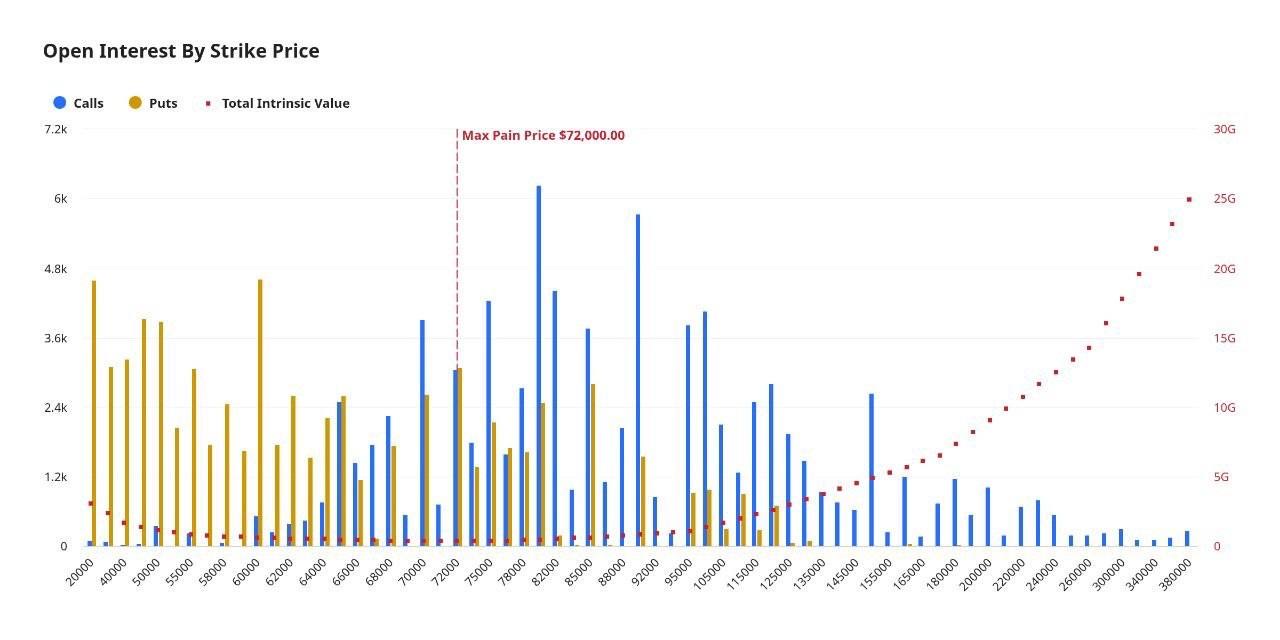
The Bitcoin price crashed below $60,000 as the market waits for a roughly $10 billion Deribit options expiry on Friday. With the cryptocurrency’s price crashing so low, it puts long traders in a very perilous position, as they risk their entire positions becoming completely useless. Experts have said that the options expiry could deepen selling pressure in the market, suggesting that the bitcoin price could crash below $59,000 again.
Another reason driving the violent selloff is that leveraged traders were crowded on the wrong side of the move. So far, more than $1 billion in crypto positions were liquidated in a 24-hour stretch as Bitcoin lost the $60,000 level, with long positions taking the biggest hit, according to data from the Coinglass website.
The forced selling on the part of long (bullish) traders has created a sort of feedback loop. When the market drops, long positions get liquidated. Those sales push the price lower, which triggers more liquidations. The result is often a fast, exaggerated move that looks worse than a normal spot-market decline, completing the cycle.
Derivatives positioning is also part of the crash story, with the Deribit expiry set with a max-pain level around $72,000, which is far above the current spot levels. That does not mean price is “guaranteed” to move to that level. In fact, the Bitcoin price has been weak following recent expiries, and Wintermute’s Jasper De Maere said recent settlements have not mechanically pinned prices the way traders often expect them to.
ETF Outflows May Keep Pushing Price Lower
Over the last two months, the Bitcoin ETF net flows have been leaning deftly towards the negative. So far, over $5 billion has been pulled out of the exchange-traded funds, showing a rapid sell-off trend among institutional investors. While there has been some relief this week, it is possible that these sell-offs could strengthen further.
Presently, the spot demand for BTC is not strong enough to absorb the leverage washout quickly. This is important because ETF demand has been one of the biggest drivers of the current cycle. So, as these flows turn negative, it removes a major source of support that could cause the Bitcoin price to crash further.
Macro conditions are also working against risk assets like Bitcoin. The US Federal Reserve has taken a more hawkish stance in recent meetings, and higher yields usually weigh on assets that do not produce income. During times like these, crypto prices tend to crash while investors rush toward Treasury bills or yield-bearing alternatives during periods of uncertainty.
With the Bitcoin price trading below $60,000, it is firmly below its 200-week moving average of around $62,000. This level has often been seen as the level that serves as the line between bull-market correction and deeper bear-market stress, making it very important. Nevertheless, the Bitcoin price continues to search for support, but with the current sell-off volumes, it is likely that the price will fall further before finding support above $50,000.
Market activity
Bitcoin
Market data and charting provided by TradingView. Data may be delayed depending on exchange availability.