
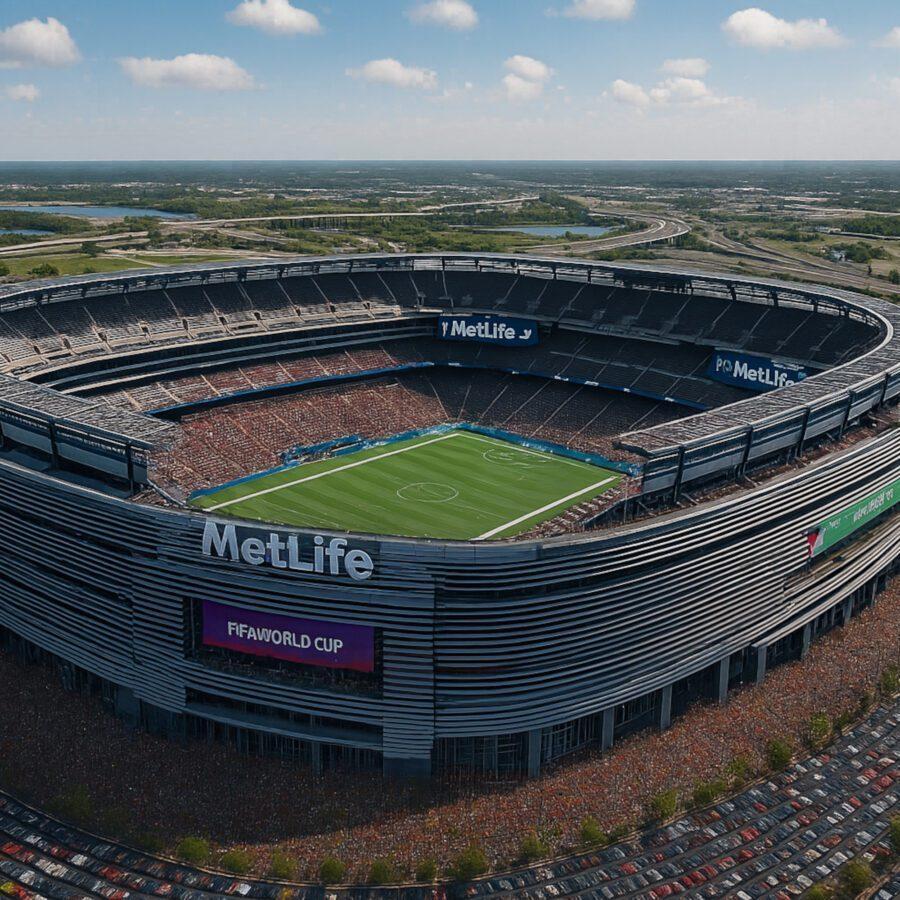
The FIFA World Cup is set to give the US economy a short-term lift. The 2026 tournament, the biggest so far in World Cup history, is being held across the United States, Canada, and Mexico in a joint partnership. Although the majority of the matches are held in the US, the bigger question on the lips of American citizens is who pays, who benefits, and whether the gains last once the final whistle blows.
That sheer scale of the event has led to a rare economic stress test for airports, hotels, transit systems, restaurants, and local governments in host markets, with Americans feeling the most stress. As the tournament progresses and the US is flooded with FIFA World Cup watchers, it has also reignited a familiar debate as to whether mega-events create durable value or are just a burst of activity that quickly fades.
FIFA World Cup spending and the US economy
Official and commissioned estimates point to real money flowing into host regions during the duration of the FIFA World Cup. FIFA said in April 2025 that an OpenEconomics study projected that the tournament could support about 185,000 full-time-equivalent jobs in the US and generate $30.5 billion in gross output, as well a $17.2 billion in GDP across the host countries' US footprint. The football federation also published a December 2024 assessment for Canada that predicted an estimated CAD 3.8 billion in economic output.
However, those figures should be read as gross impact estimates, not guaranteed net gains, and economists have warned that some spending from this time could be simply shifted from other places or other dates. So far, the strongest near-term upside comes from visitors.
A U.S. Travel Association study released in 2026 revealed that international World Cup travelers expect to spend more than $5,000 per person and that more than 80% are open to visiting places beyond the biggest gateway cities. That matters because tourism spending tends to ripple through hotels, food service, retail, and transportation, and if World Cup travelers are expanding the scope of their visit, then the money could be spread farther than projected
Oxford Economics affiliate Tourism Economics also projected in November 2025 that the US could welcome 1.24 million international visitors for the event, with 742,000 of those trips expected to rise continuously. If that forecast proves close, the FIFA World Cup could give the US economy a meaningful summer bump, especially in cities with large stadiums and established visitor networks where watchers could indulge in other tourist activities.
What US Citizens May Actually Feel
For most Americans, the impact will show up less in macroeconomic statistics and more in everyday prices and disruptions. The clearest winners are likely to be airlines, hotels, restaurants, ride-hailing firms, event workers, and the tax offices, even though American citizens in host cities may see new jobs created.
In host cities, hotel rates can spike, restaurant reservations can tighten, and transit systems can become more expensive or crowded, making it harder for locals to participate. While some residents may benefit by renting out homes, working extra shifts during this time, or selling goods and services to visitors, others may find themselves in a tighter spot as they pay more for commuting, parking, or ordinary weekend travel that would otherwise be cheap.
In other words, the FIFA World Cup is likely to be a win for selected industries and a mixed bag for taxpayers/citizens. The US economy may get a summer boost from the tournament, but the real value will only be accounted for by taking into account how much of the spending done turns into durable infrastructure, better transport systems, and repeat tourism after the tournament is over.