
US inflation surged to 4.1% in May, its highest pace in three years, according to the Bureau of Labor Statistics. This data shows how quickly price pressures have returned to the center of the policy debate, even as the labor market remains relatively firm.
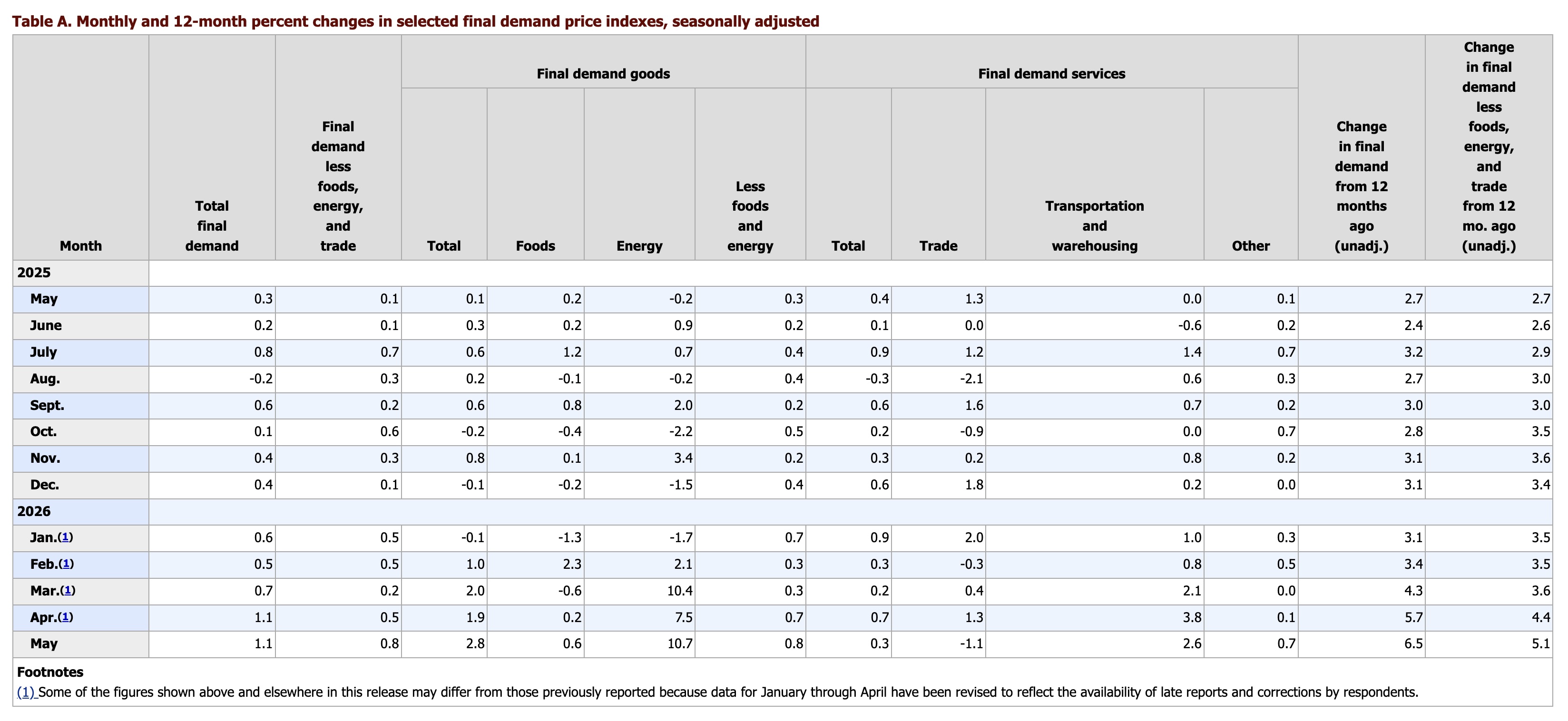
The latest reading arrived after a string of hotter producer-price figures and renewed concern over energy costs. In its June 11 release, the BLS said the Producer Price Index for final demand rose 1.1% in May and 6.5% over the past 12 months, the largest annual increase since November 2022. Final demand goods also jumped 2.8%, and energy prices were reported to be the biggest driver during this time.
The BLS data show that energy played an outsized role in the spring jump, as gasoline prices alone rose 23.4% in the month. The report also showed higher prices in transportation, warehousing, portfolio management, and several wholesale categories. Those details help explain why the inflation story is broader than just one volatile fuel price.
That pattern is especially important because the Fed has repeatedly emphasized that it looks through isolated monthly swings when possible, but not when those pressures spread across categories. In its June 17, 2026, FOMC statement, the Fed said it kept the federal funds target range at 3.5% to 3.75% and noted that inflation remains elevated relative to its 2% goal. This was created to be “in part reflecting supply shocks that have driven price increases in certain sectors, including energy.”
How The Federal Reserve Could Take On The Rising US Inflation
The immediate market question is whether US inflation at 4.1% changes the Fed’s path for the rest of 2026. Officially, the Fed has not committed to the next move. But unofficially, traders are now parsing every new inflation release for evidence of whether rates stay higher for longer, especially with a new Fed chairman, Kevin Warsh, taking charge in May.
The Fed left rates unchanged at the June meeting as inflation is still far above target. This suggests that the Fed could respond rapidly if these figures do not begin to ease soon. The new chairman has also taken on a more hawkish tone, including the removal of forward guidance from the statement.
Despite this, it does not guarantee that the Fed will implement another rate increase. It does mean the burden of proof has shifted back to the disinflation camp. For now, credit costs are expected to stay elevated, savings yields may remain attractive, and borrowing-sensitive sectors such as housing could feel pressure if price growth stays sticky.
Oil prices are already dropping following the US-Iran peace talks and the opening of the Strait of Hormuz. However, there is still a lot of uncertainty in the macro climate. Across the pond, inflation in the UK has remained steady at 2.8%, outpacing the US in this regard.
To find out how the rising inflation is affecting your wages, check out our Wage Inflation Calculator to see how much you’ve lost and what your real wage should be.