
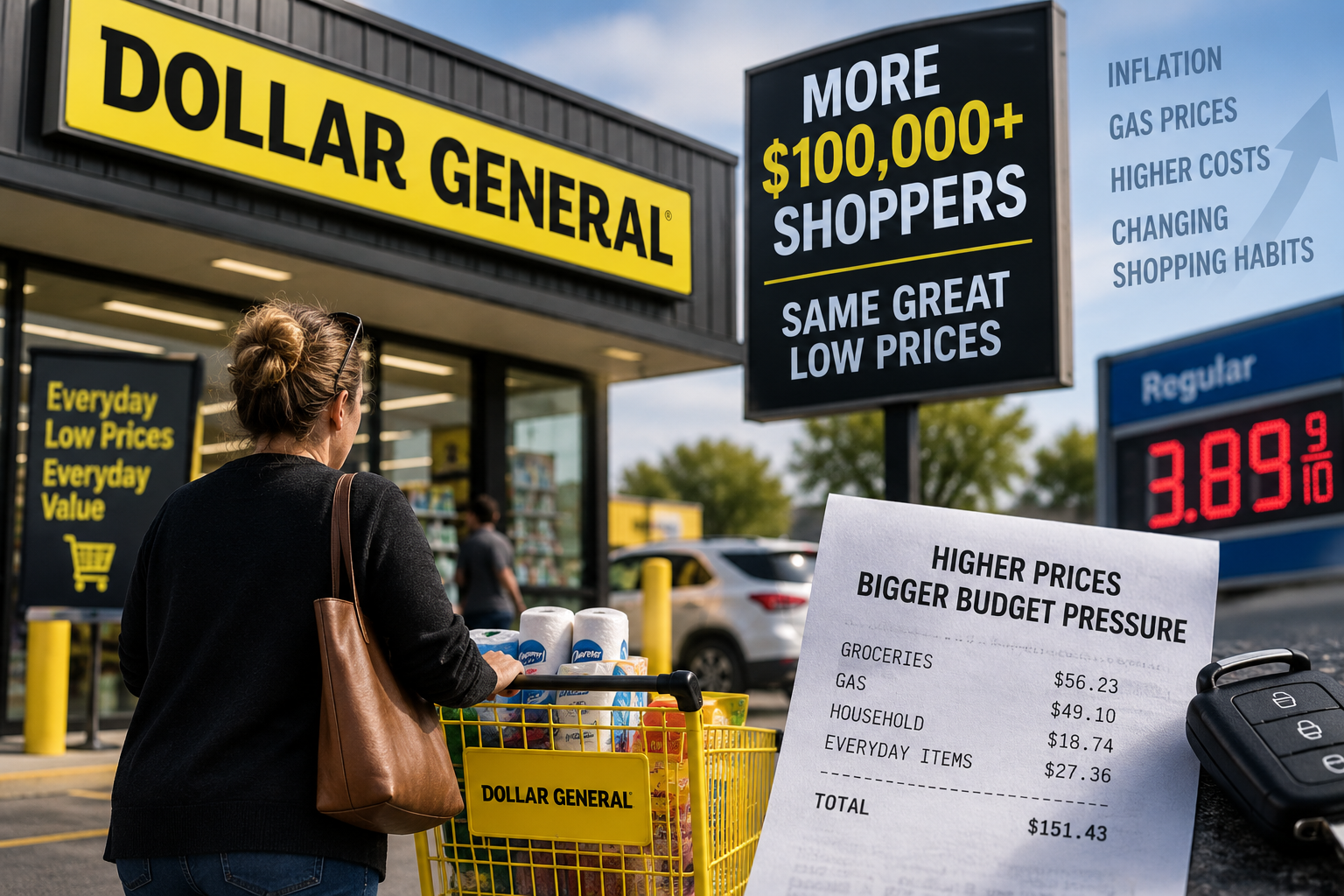
- The discount retailer is seeing more higher-income consumers shop for value as elevated living costs and gasoline prices put pressure on household budgets.
Dollar General (NYSE: DG) is seeing more shoppers earning $100,000 or more turn to discount stores as inflation, gasoline prices, and other household expenses put pressure on their purchasing power. CEO Todd Vasos said at the Goldman Sachs Global Consumer and Retail Conference that consumers across income groups are feeling the strain, with some middle- and upper-middle-income shoppers increasingly behaving like Dollar General's traditional lower-income customers.
Fortune reported that Vasos said some customers earning $100,000 or more no longer feel like higher-income consumers because of the rising cost of living.
The shift gives Dollar General access to a broader group of value-conscious shoppers while also highlighting the pressure facing US consumers even at relatively high income levels.
Why are $100,000 earners shopping at Dollar General?
Higher-income consumers are changing how frequently they shop and how much they spend on each trip. Vasos said Dollar General is seeing shoppers who previously visited its stores only occasionally begin shopping there more regularly. Meanwhile, the company's core lower-income customers are buying less during individual trips but returning more frequently as they manage their budgets.
The change is occurring as gasoline and other essential expenses consume a larger share of household income. Fortune reported that Vasos specifically pointed to elevated gas prices, inflation, and other cost-of-living pressures as factors affecting shoppers earning six figures.
The trend is important for Dollar General because its stores are generally positioned around convenience and low prices, potentially making them attractive to consumers looking to reduce spending without eliminating purchases entirely.
High gas prices are changing consumer behavior
Fuel costs have become an increasingly important factor in household budgets. When gasoline prices rise, consumers can respond by consolidating shopping trips, buying less during each visit or choosing stores closer to home. Vasos said Dollar General's core customers have been doing exactly that, with shopping frequency increasing while the amount purchased per trip declines.
Dollar General says it is within five miles of 75% of the US population, giving proximity added importance when consumers are trying to limit fuel expenses. The company is also expanding its low-price merchandise. Dollar General said its Value Valley $1 assortment posted 16% growth, while management plans to increase its seasonal dollar-item assortment during the second half of the year.
Dollar General earnings show consumers are still spending
The shift toward value comes as Dollar General continues to report sales growth. For its fiscal second quarter ended July 31, Dollar General reported $11.3 billion in net sales, up 5.2% from a year earlier. Same-store sales increased 3.5%, driven by a 2% increase in customer traffic and a 1.5% increase in average transaction value.
Operating profit rose 29.2% to $769.2 million, while diluted earnings per share increased 33.3% to $2.48. The company said tariff refunds contributed to the improvement in gross and operating margins, meaning part of the benefit is not expected to repeat in the second half.
Dollar General raised its fiscal 2026 outlook and now expects sales growth of 4% to 4.3%, same-store sales growth of 2.5% to 2.9% and diluted EPS of $7.80 to $8. The company also authorized up to $700 million in share repurchases.
Dollar General is betting on value
The retailer is responding to changing consumer behavior by putting greater emphasis on its lowest-priced products. Vasos said Dollar General has approximately 2,000 items priced at or below $1 and plans to expand that assortment as it moves through the second half of the year.
The strategy could help the company retain shoppers who trade down during periods of economic pressure, while also giving it an opportunity to keep some higher-income customers who discover the retailer while looking for savings.
The bigger question is whether those shopping habits persist if inflation and fuel prices eventually ease.
For now, Dollar General's experience suggests that the effects of higher living costs are reaching further up the income scale, with some six-figure earners increasingly looking for the same discounts that have long attracted the retailer's core customers.